A 50-Year Journey to One Piece of the Climate Solution
A 50-Year Journey to One Piece of the Climate Solution

Pre-lecture discussion with Prof. Susumu Kitagawa (2025 Nobel Prize in Chemistry) at the BRIN Serpong complex.
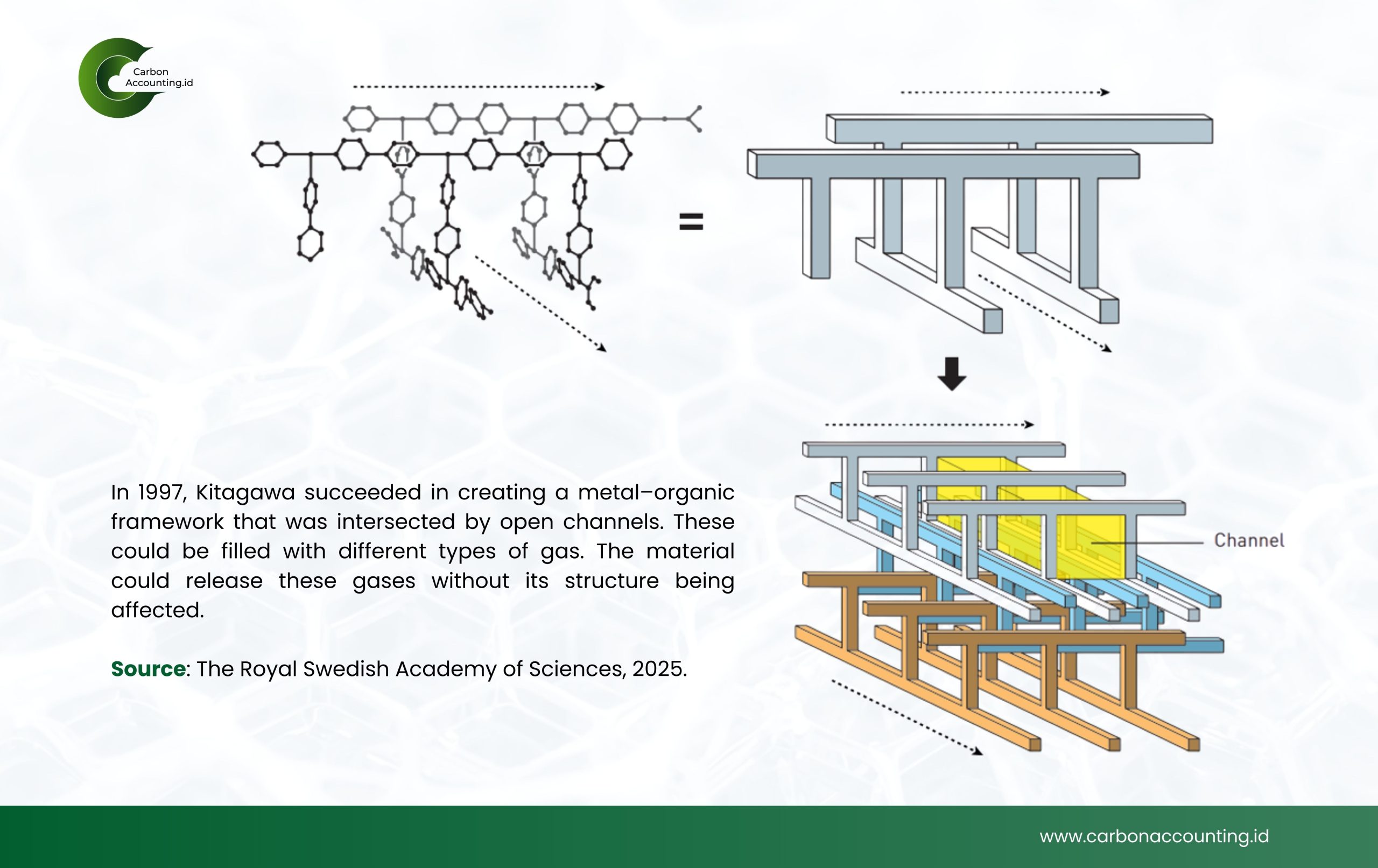
In 1997, Kitagawa succeeded in creating a metal–organic framework that was intersected by open channels.
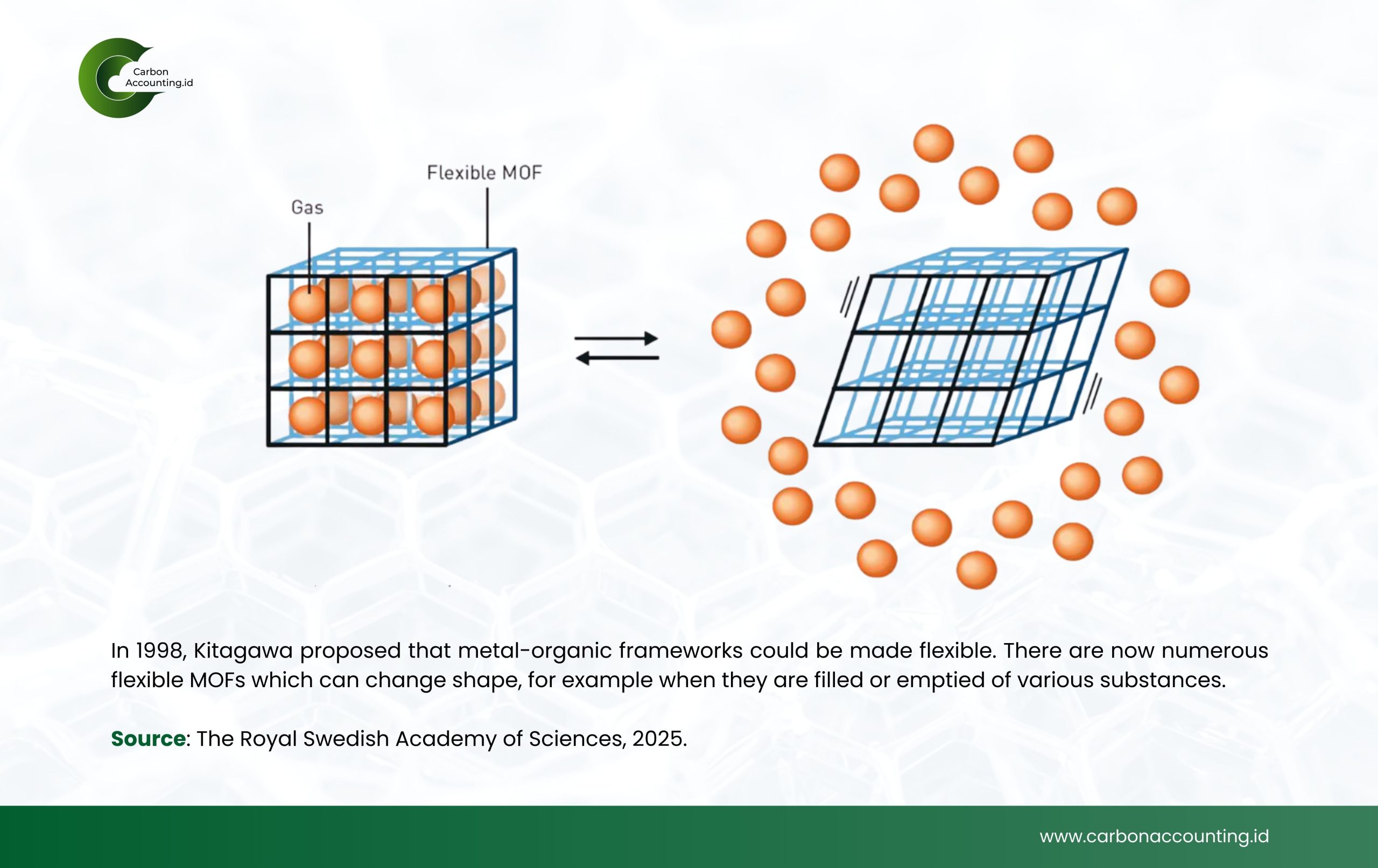
In 1998, Kitagawa introduced the idea of flexible frameworks that could respond dynamically to external stimuli.
What if one of the biggest climate levers isn’t a new power plant, but a better “filter” for molecules?
Last week at BRIN Serpong, we listened to Susumu Kitagawa (2025 Nobel Prize in Chemistry) describe what it means to stay with one scientific question for nearly 50 years. No hype, no shortcuts, just the long road.
In 2025, Kitagawa, Richard Robson, and Omar M. Yaghi shared the Chemistry Nobel for Metal-Organic Frameworks (MOFs), materials that are famous for one strange feature: they’re mostly empty space. They’re crystals built from metal “junctions” and organic “connectors”, leaving behind tiny pores that can be tuned to welcome some molecules and reject others.
When people explain MOFs, it can sound abstract, but the core idea is simple. It’s a crystal with lots of controlled empty space inside. That space acts like a set of microscopic rooms, and the “door size” determines what gets in.
Why does that matter for climate? Because industry spends enormous energy on separations: capturing CO₂, purifying gases, sorting chemical streams. MOFs are studied because they can potentially make these separations more efficient, reducing energy use where it’s usually invisible.
MOFs also show up in the green hydrogen conversation. Some can hold hydrogen and then release it again. The hope is to make storage denser and safer, closer to everyday temperatures and pressures.
For climate adaptation, one MOF idea still feels like a small miracle: getting water out of air that already feels “empty”. In 2017, Hyunho Kim and colleagues showed a MOF-801 device that could harvest water even around 20% relative humidity, using low-grade heat from sunlight.
MOFs won’t solve climate change by themselves, and turning lab setups into cheap, reliable products is a long fight.
However, Kitagawa’s story makes it easier to believe in that fight, because progress is often a group of people returning to the same hard problem until it finally starts to move.