The Real Test of the Energy Transition
The Real Test of the Energy Transition
How Renewable Capacity Becomes a Transition-Ready Power System
The energy transition is not tested when the ribbon is cut. It is tested at dusk, when clouds gather, and demand rises. The grid must decide whether clean power can truly be trusted.
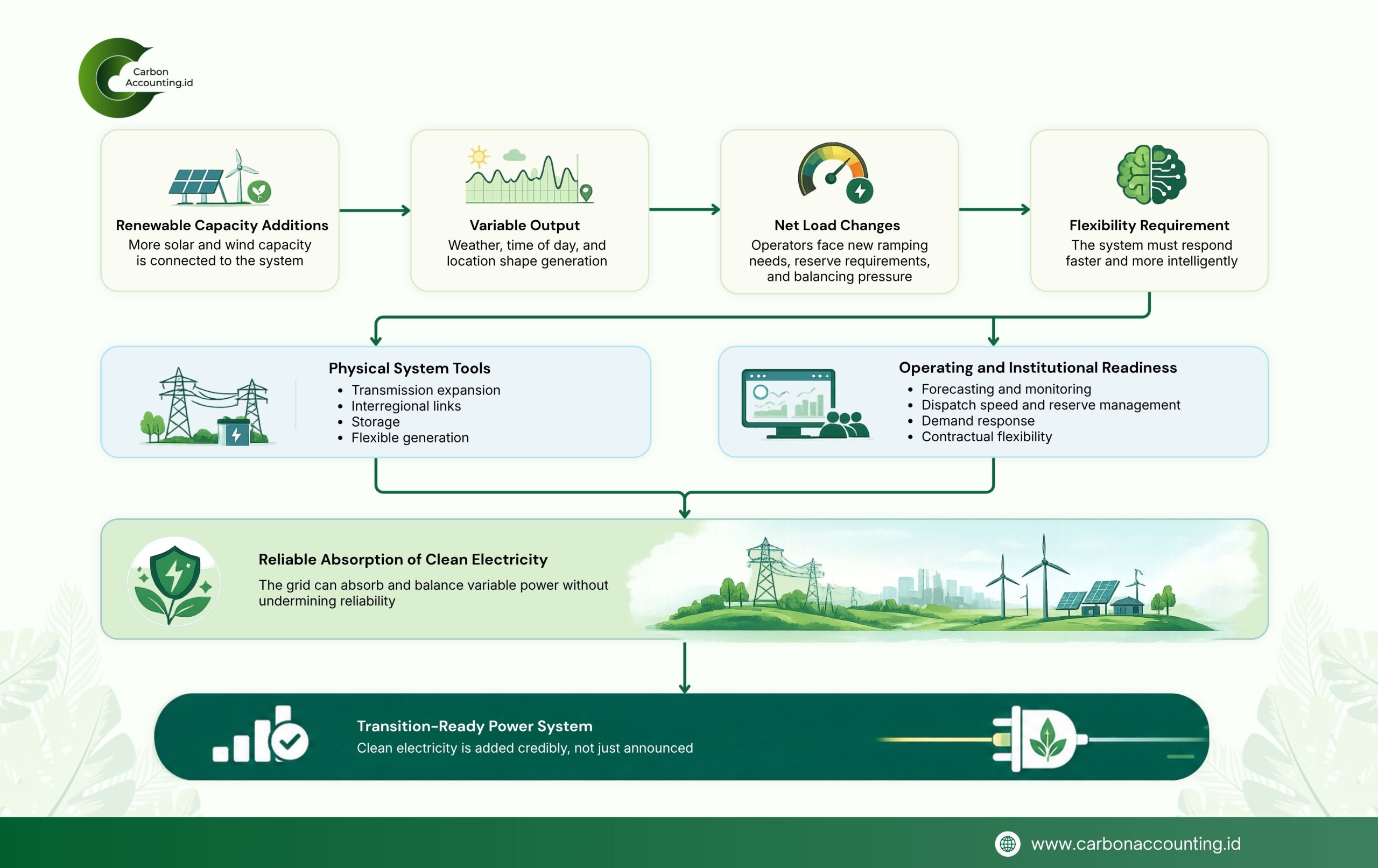
That is why renewable capacity is only half the story. Building the project matters, but the harder question begins after electricity starts to flow. A transition becomes real only when the system can absorb changing output without creating new strains elsewhere.
The heart of the challenge is variability. As solar and wind take a larger role, operators no longer manage only total demand. They must manage net load after renewable output rises and falls, which changes ramping needs, reserve requirements, forecasting, and dispatch.
Indonesia offers a useful example. The IEA found that the Java Bali and Sumatra systems could accommodate a 10 percent solar share by 2025 using flexibility already present in the system. But that did not mean integration would be easy.
In Sumatra, the same study still found annual curtailment of around 14 percent during periods of low demand and strong solar output. Its message was clear. The issue is not simply whether renewable power can enter the grid, but whether the system is operated well enough to handle it.
The constraints are not only technical. They are also contractual and institutional. Take or pay clauses in power purchase and gas supply contracts can reduce the willingness of thermal plants to ramp up and down, leaving less room for renewable electricity even when the steel is already in place.
Storage matters, but it does not solve the whole problem. Batteries can react quickly, help steady the system, and shift electricity into the evening peak. Even so, they work best in a grid that is also improving transmission, forecasting, dispatch, plant flexibility, and the ability to move demand into more suitable hours.
That is why Indonesia’s energy planning is starting to look less like a list of power plants and more like a plan for system management. PLN’s 2024 climate related disclosure points to major investment in battery storage, transmission, and smart grids through 2034.
In the end, the transition will be judged not by how many projects are announced, but by whether the system can keep the lights on when clean electricity begins to dominate the wire.