Transition Plans and Capital Allocation
Transition Plans and Capital Allocation
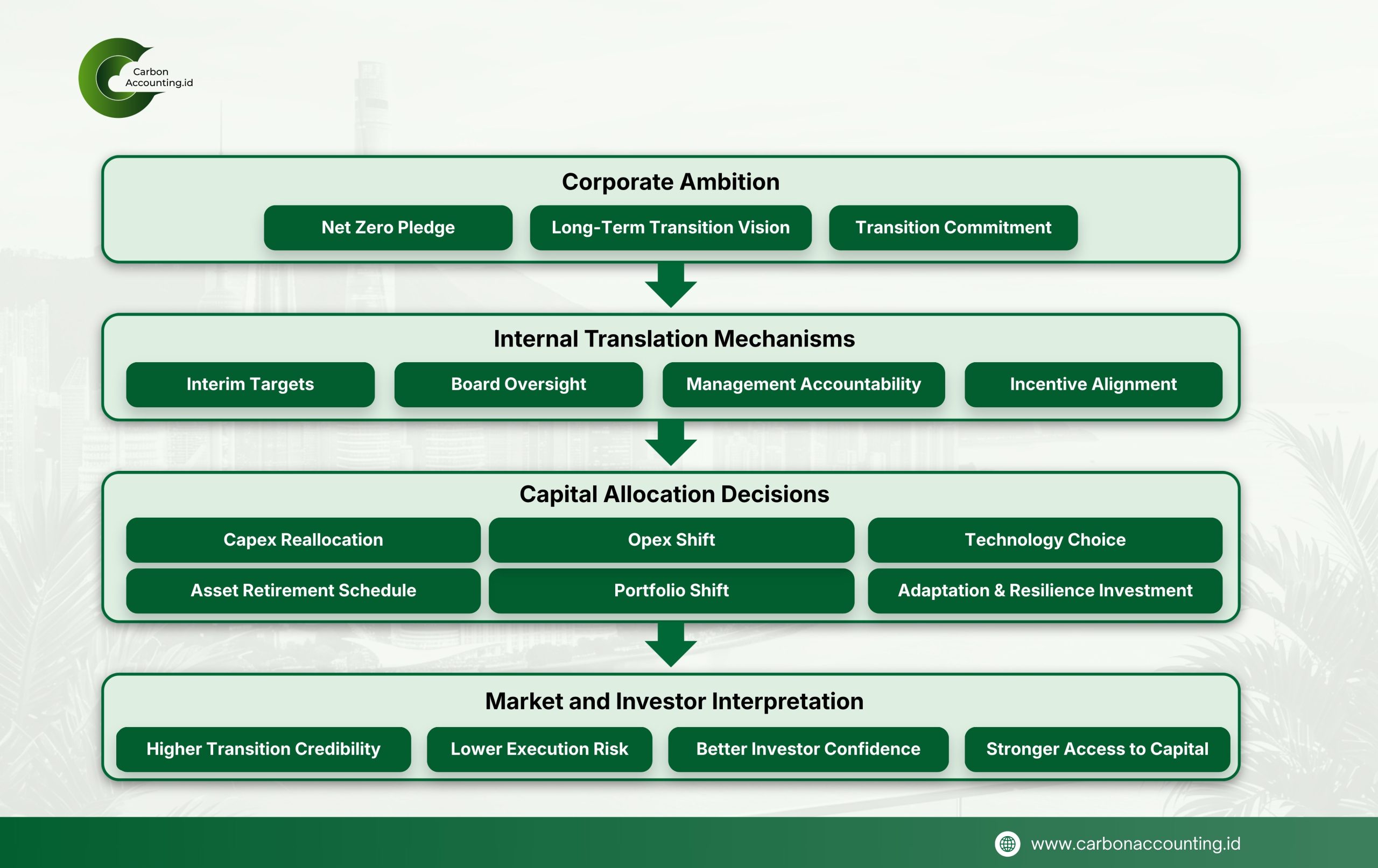
From Climate Promise to Capital Allocation: Linking Governance, Targets, and Investment Decisions in Transition Planning
Ambition is easy to announce. Capital allocation is harder to fake. That is why investors are no longer satisfied with climate promises on paper alone. They increasingly want to see whether a company’s transition story is visible in the places that matter most: spending plans, asset decisions, technology choices, and the discipline of management.
The conversation has shifted. A credible transition plan is no longer just a climate document. It is becoming a test of business seriousness, because markets want to know not only where a company wants to go, but how management intends to get there and what it is prepared to fund.
Inside the company, this turns sustainability into a question of allocation. If management is serious about transition, the evidence will appear in capex, opex, research priorities, asset retirement schedules, procurement choices, and the technologies the firm is willing to back. Money has a way of revealing whether strategy is real.
This is why interim targets matter. Long term ambition without near term milestones is easy to publish and hard to trust. Investors increasingly look for transition plans that break the journey into measurable steps, so progress can be tracked against business actions rather than future language.
Governance matters for the same reason. A transition plan becomes more credible when the board oversees it, management is accountable for it, and incentives are tied to climate related performance. A company signals seriousness when transition is treated not as a side agenda, but as part of how leadership is evaluated.
Funding strategy matters too. Markets are now asking how transition will be financed, which assets will be upgraded, which businesses will be scaled down, which portfolios will shift, and how the company will absorb the cost of change. A transition plan without a financing logic is often just a declaration with better formatting.
Another important shift is the growing expectation that transition plans should not focus only on decarbonisation, but also reflect resilience. Physical climate risk can derail the economics of transition itself. That is why global discussion is placing more weight on plans that integrate adaptation, risk management, and capital discipline.
Sooner or later, every serious transition plan faces the same question: where is the money going? The answer tells investors far more than any slogan can, because capital has become the clearest language of corporate conviction.