Taxonomy as Soft Law
Taxonomy as Soft Law
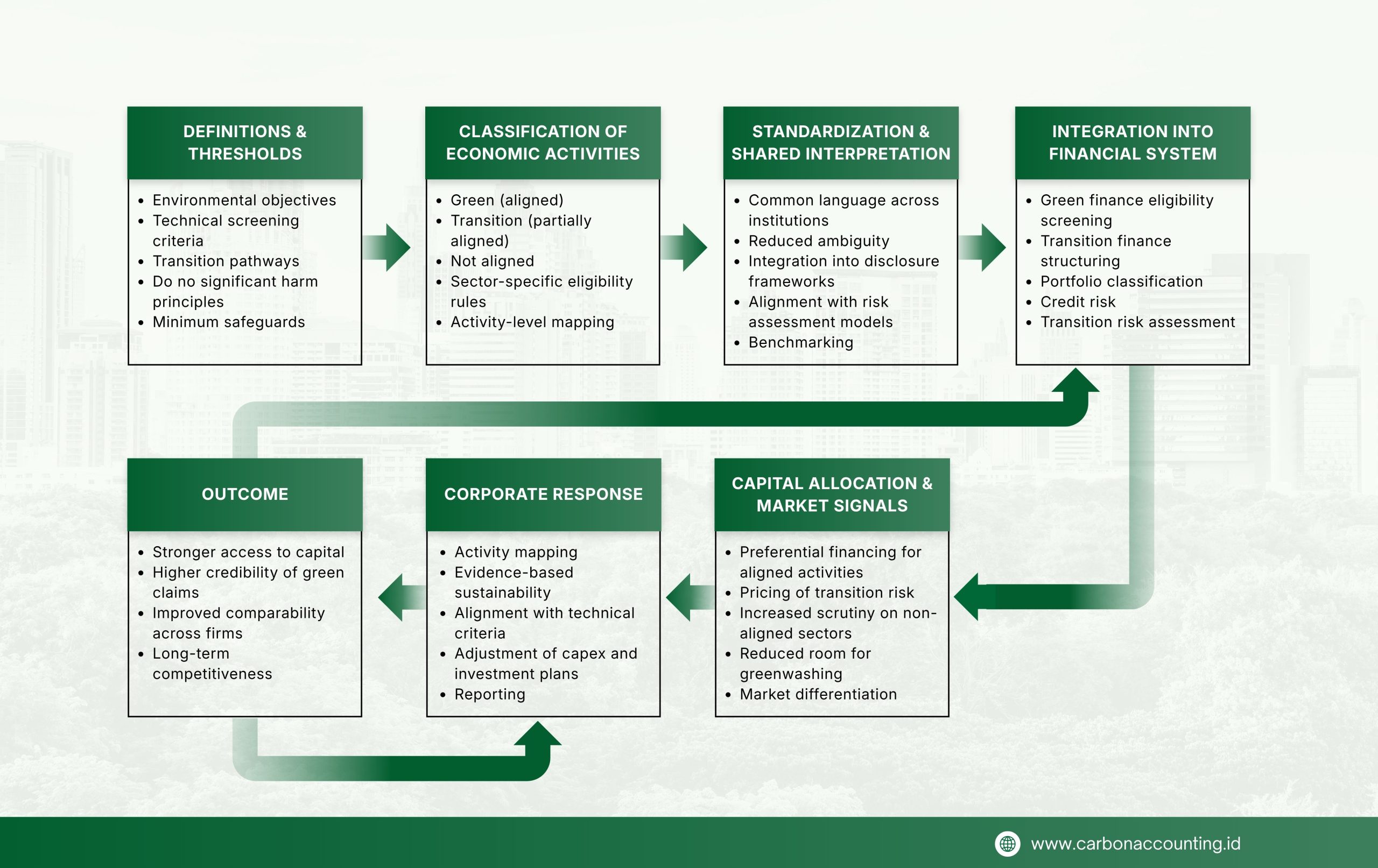
How taxonomy as soft law shapes real economic consequences.
Law does not always arrive with a sanction. In the green economy, it often enters more quietly, through definitions, classifications, and thresholds that decide what counts as green, what still belongs to transition, and what falls short. That is why taxonomy matters. It is soft law, but soft law that increasingly shapes hard consequences.
At its simplest, taxonomy is a classification system for economic activities. It sorts activities according to criteria that show whether they support environmental goals or a credible transition. In sustainable finance, that makes it practical, not abstract. It helps answer a basic market question: which activities deserve to be treated as green, which are still moving in the right direction, and which cannot yet make that claim.
This became more important when ASEAN Taxonomy for Sustainable Finance Version 4 was released on 6 November 2025, followed by Indonesia’s TKBI Version 3 in February 2026. These were not just technical updates. ASEAN Taxonomy v4 completed the regional framework’s Plus Standard coverage, while TKBI v3 marked the completion of Indonesia’s classification framework for sectors linked to national climate goals.
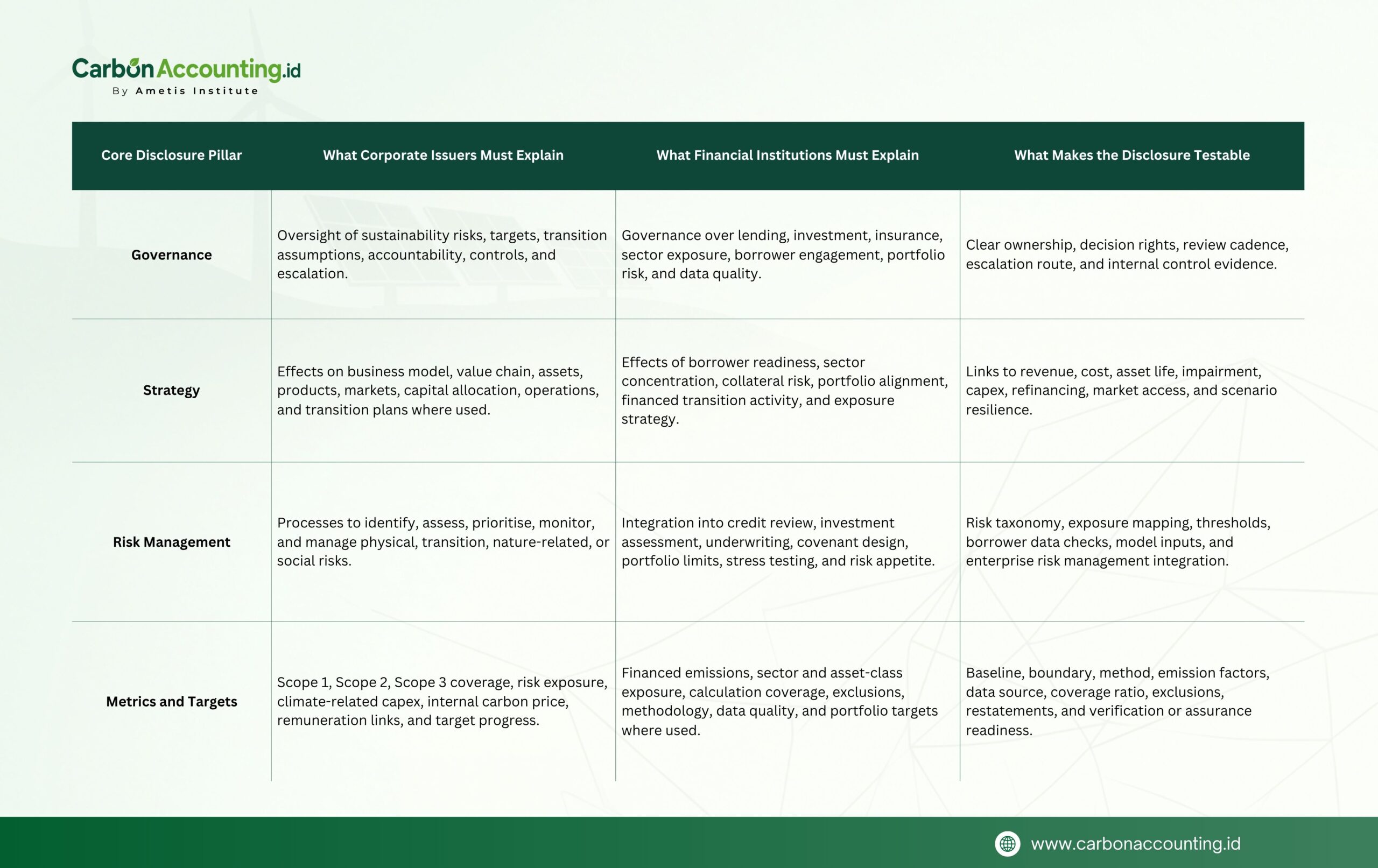
What makes taxonomy powerful is not only its design, but its adoption. OJK describes TKBI as a common language for defining economic activities that align with sustainable development goals. It is also intended to create transparency, reduce greenwashing, and support other parts of the sustainable finance system, including disclosure requirements, risk management, and financial products.
That shift changes how capital is allocated. Once banks, investors, and capital markets begin reading activities through a shared classification system, taxonomy becomes more than guidance. It starts influencing financing decisions, transition instruments, and the credibility of green claims. The ASEAN framework itself is positioned as a regional reference point to guide capital and funding toward activities that support systemic transformation.
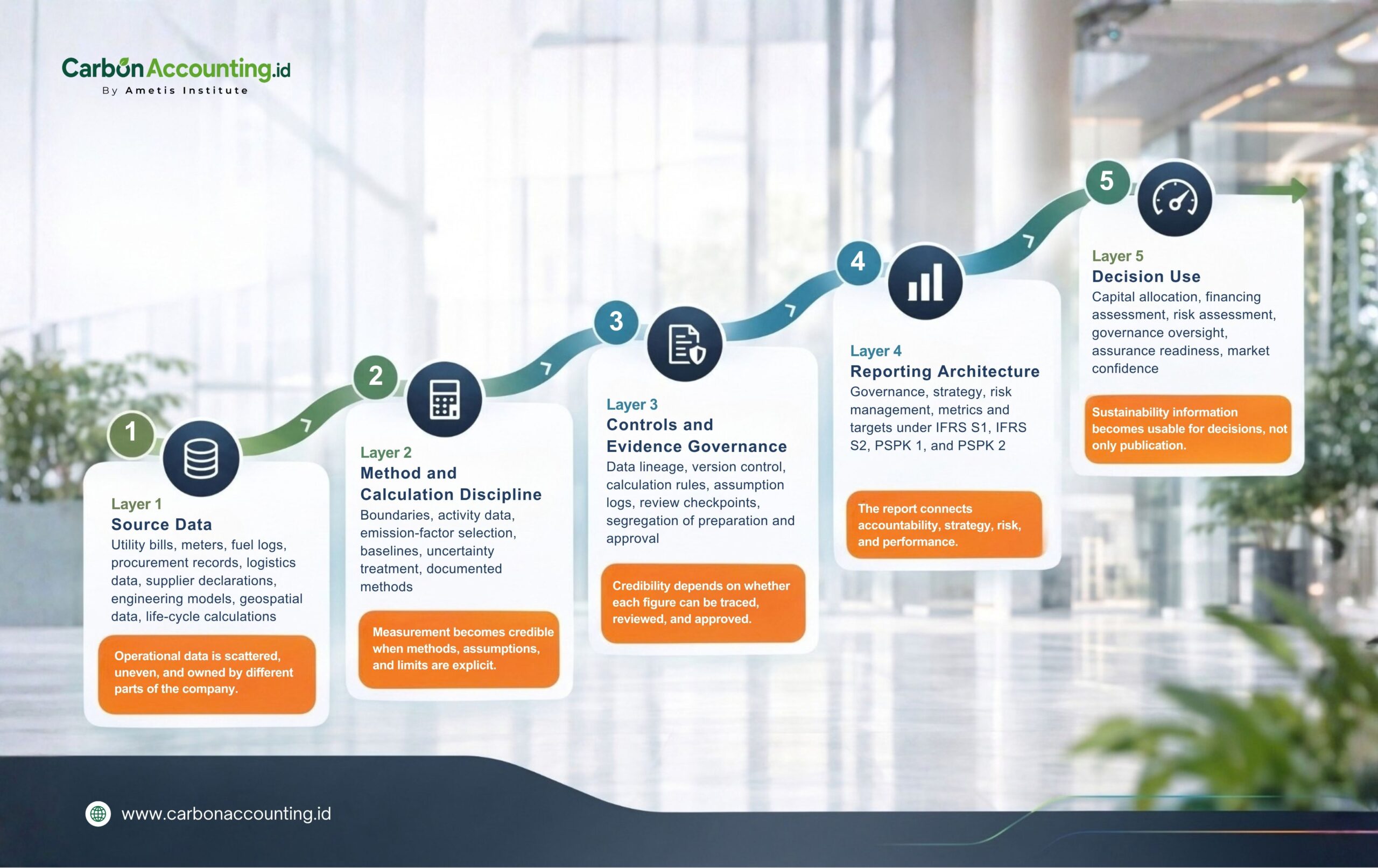
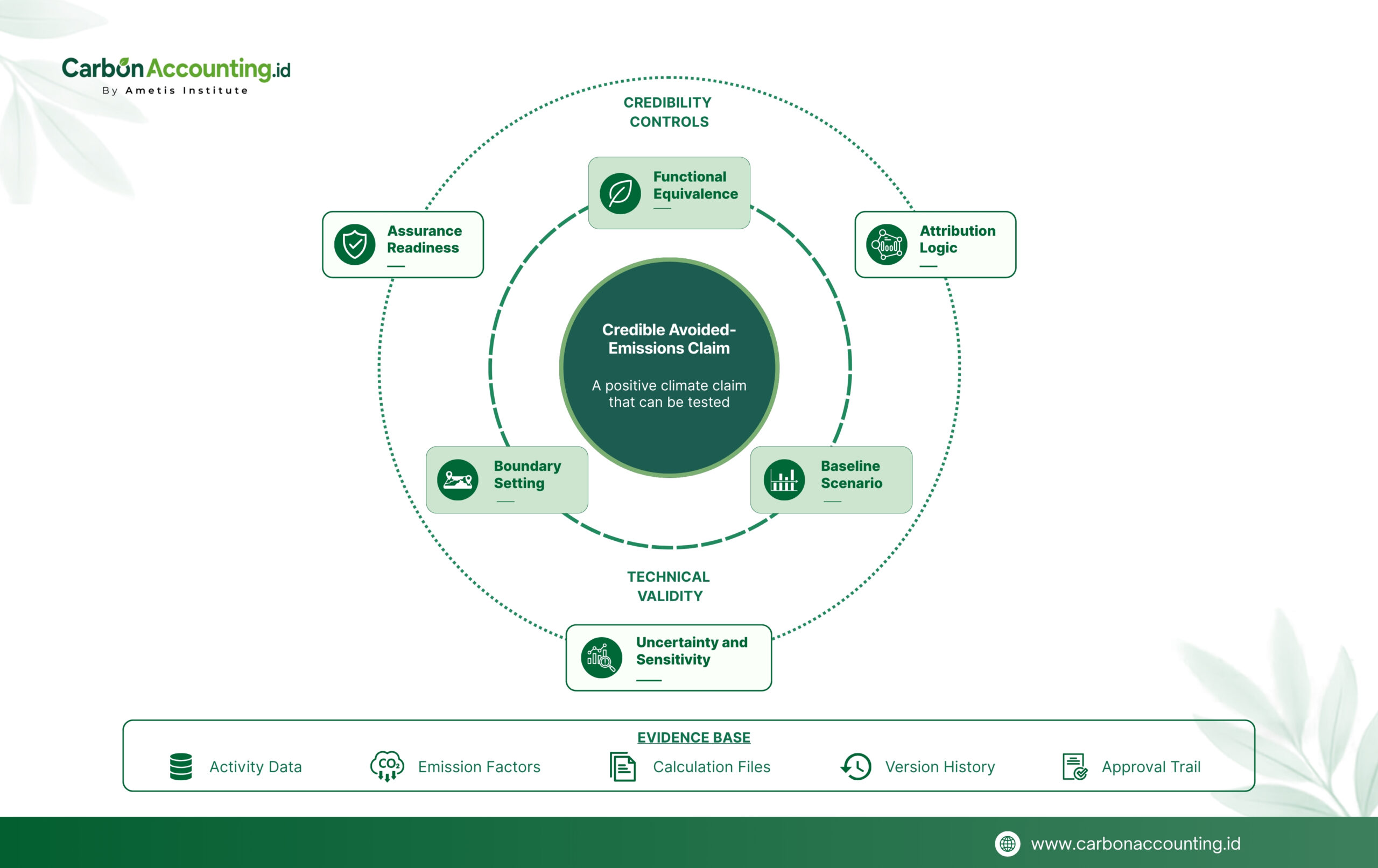
For Indonesian companies, the message is becoming harder to ignore. Sustainability can no longer rest on narrative alone. The market now expects something more exact: a clear account of where an activity stands, what criteria it meets, and what evidence supports that position. Taxonomy brings that discipline into the room.
This is what makes taxonomy important far beyond technical policy circles. It has become a meeting point between regulatory expectation, financial judgment, and business strategy. It may not look like binding law, yet it is already influencing how credibility is assessed by lenders, investors, and public authorities.
That is why the future of green credibility in Indonesia may depend on something quite simple. Not who makes the grandest promise, but who can show, with clarity and discipline, where their activities truly belong.