The New Test of Supply Chain Trust
The New Test of Supply Chain Trust
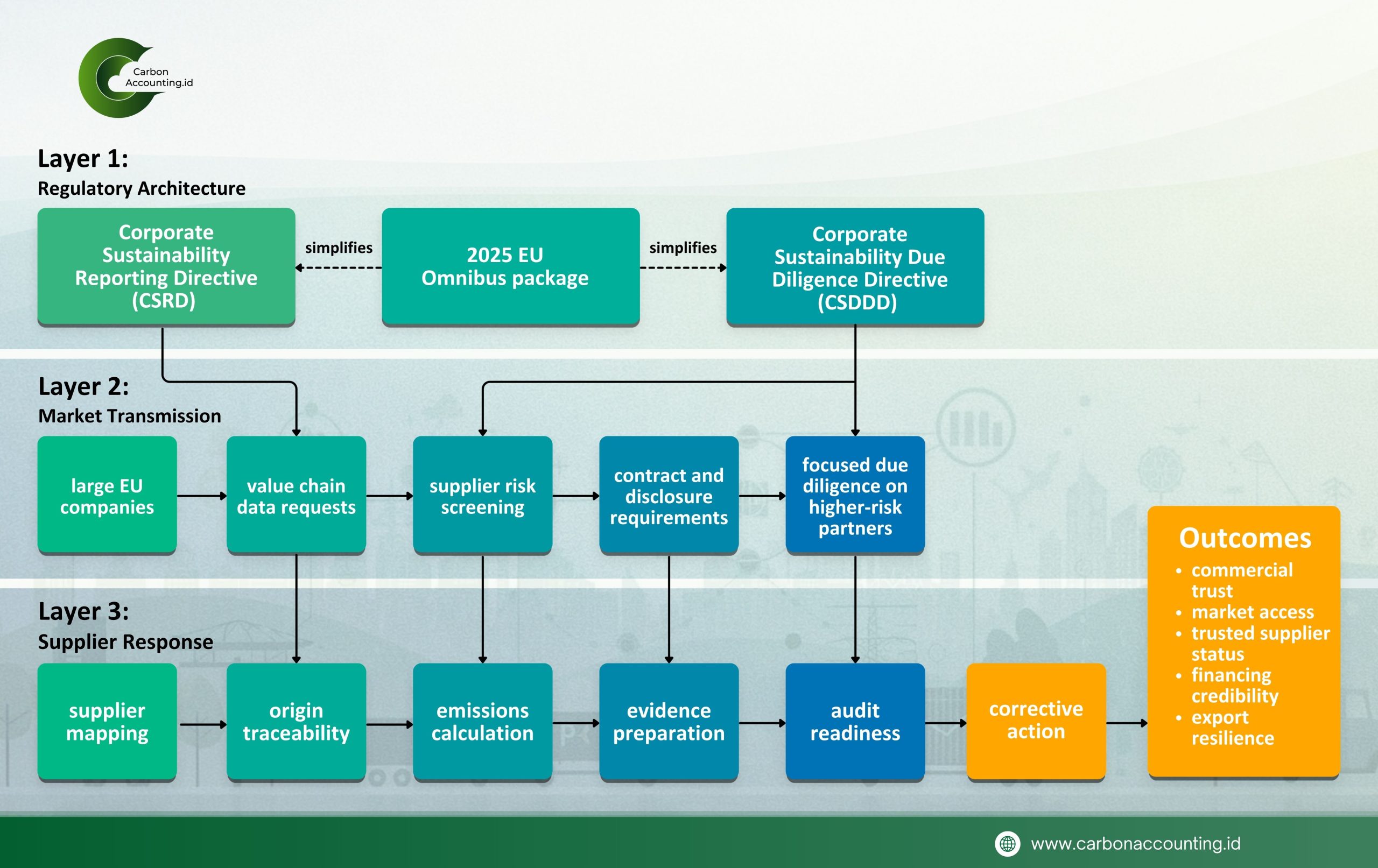
How EU sustainability rules travel through the value chain to suppliers.
The strength of a supply chain is not measured only by speed or cost, but by how well each link can be traced and verified. Careful due diligence helps ensure that transparency and legal compliance are built into the chain itself.
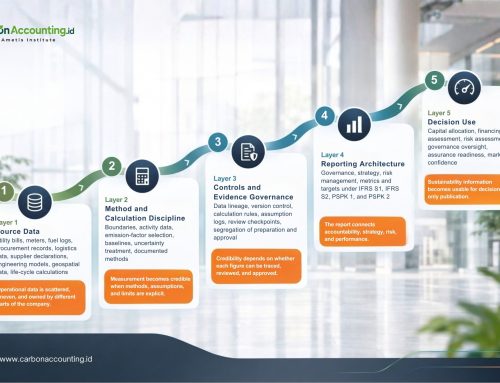
Supply chain due diligence has become a real test of sustainability compliance. It is no longer enough for a company to make the right statements in a report. What matters is whether it genuinely understands its supply chain, knows where the risks are, and can support its claims with data that others can verify.
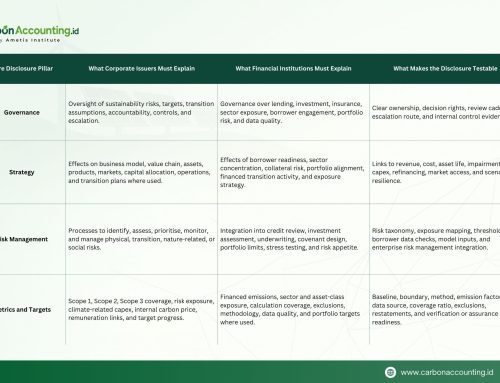
Europe has made the direction of travel much clearer. Under the Corporate Sustainability Reporting Directive (CSRD) and Corporate Sustainability Due Diligence Directive (CSDDD), the real test no longer ends within the company’s own operations. It extends into the wider value chain, where risks and impacts often tell the fuller story.
It is true that the 2025 EU Omnibus package seeks to simplify part of this architecture. In particular, it proposes adjustments to the scope and burden of the CSRD and the CSDDD. But simplification does not mean the direction has changed. The system may become lighter, yet the core expectation remains.
That is why the pressure on suppliers will not disappear. Large companies will still need value chain data from the businesses they buy from, work with, or finance. What is changing is the form. The expectation now is for supplier information to be more orderly, more consistent, and easier to verify.
This matters for Indonesia not because every domestic company will automatically become a direct legal subject overseas, but because trade relationships will carry these demands into the market. Companies that serve export chains may increasingly face practical questions from buyers, brand owners, distributors, and financiers.
They may be asked where raw materials come from, how emissions are calculated, whether supplier data can be traced, and whether the underlying evidence is ready for review. That makes the real strategic question much sharper. It is no longer only about whether a company is required to report, but whether it is ready to remain a trusted supplier.
In today’s market, competitiveness is no longer built only on low prices or strong products. It also depends on whether a company can explain its supply chain with clarity and defend its claims with evidence. Businesses that can show real supply chain integrity will be better placed to earn trust and last.