When Sustainability Becomes a Portfolio Decision
When Sustainability Becomes a Portfolio Decision
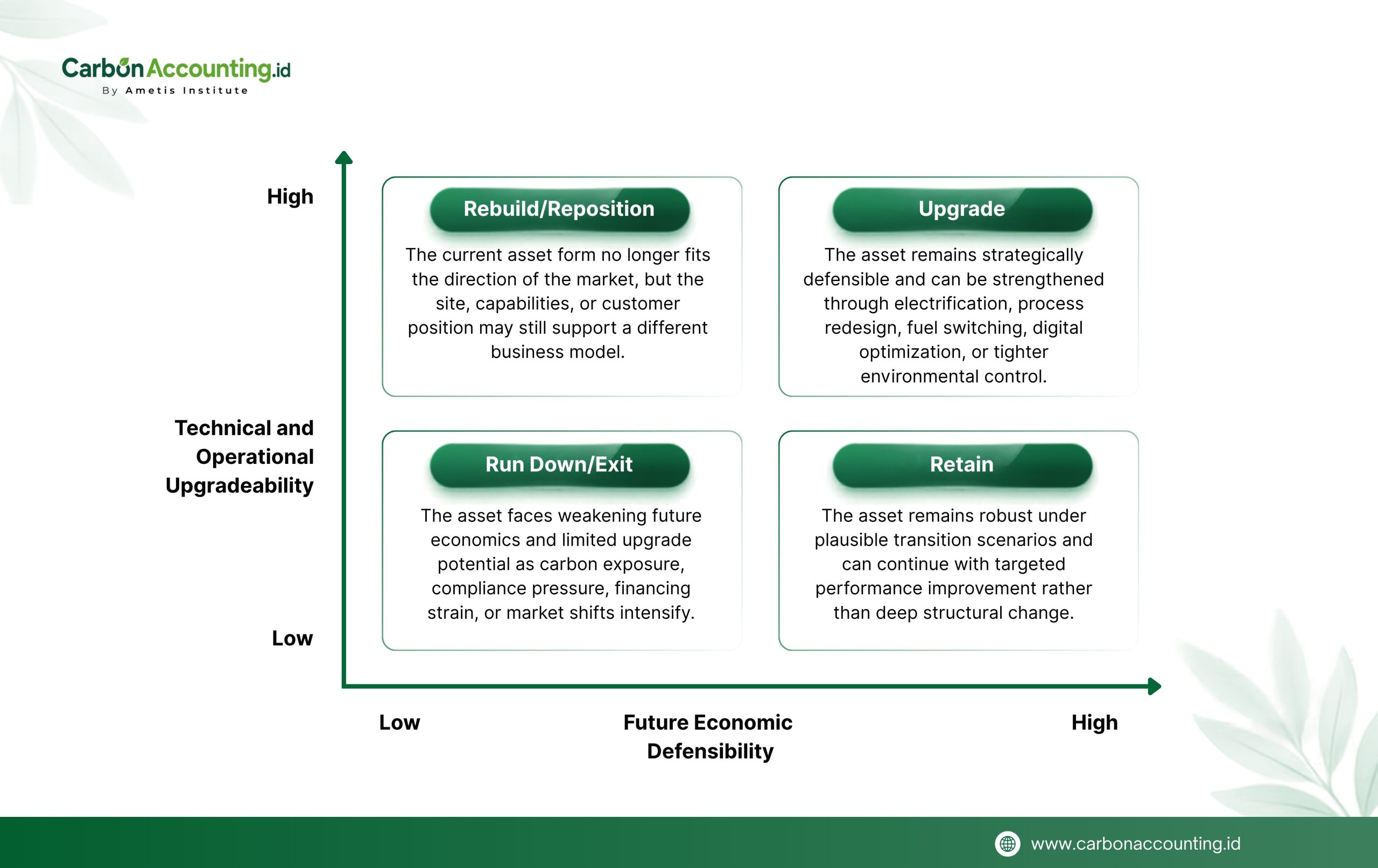
Four Strategic Choices for Portfolio Transformation.
The hardest sustainability decision is not how to improve the business, but which part of it no longer belongs in tomorrow’s economy. That is where strategy turns from comfortable to consequential.
For years, sustainability lived at the edge of the firm. It sat in reports, targets, and efficiency programs. Now it is moving to the centre, where capital is allocated and portfolios are shaped.
M&A can speed this shift by changing what sits inside the firm. But even without deals, the same question remains. Which assets still make sense under tighter rules, shifting demand, and rising climate pressure.
A useful way to read the portfolio is to sort it into four paths. Some assets are still strong and worth keeping. Some can be improved through electrification or better processes. Others are losing ground as costs rise and flexibility falls. And some no longer fit the future and need to be replaced.
This is where the discussion becomes more technical. A serious review looks beyond current profit and tests assets against energy exposure, carbon risk, asset life, and future capital cost. Many assets look healthy today but are already weakening in quieter ways.
Changing the mix of assets, however, is not the same as changing the business. A firm can sell and buy without moving forward. The deeper shift comes when it starts to earn differently and serve a different role in the market.
That is where new value appears. Not only in cleaner products, but in services, circular systems, better materials, and digital tools that help others reduce cost and risk.
This shift is already visible in the market. Customers want cleaner inputs, financiers want credible risk management, and regulators want better evidence. Companies that respond early can redesign their position. Those that wait may still improve operations, but with less room to shape their own future.
In the end, sustainability is not only about what a company reduces. It is about what kind of business it chooses to become.