Materiality, Connectivity, and Financial Relevance:
Turning Sustainability Data into Decision-Grade Information
Materiality, Connectivity, and Financial Relevance:
Turning Sustainability Data into Decision-Grade Information
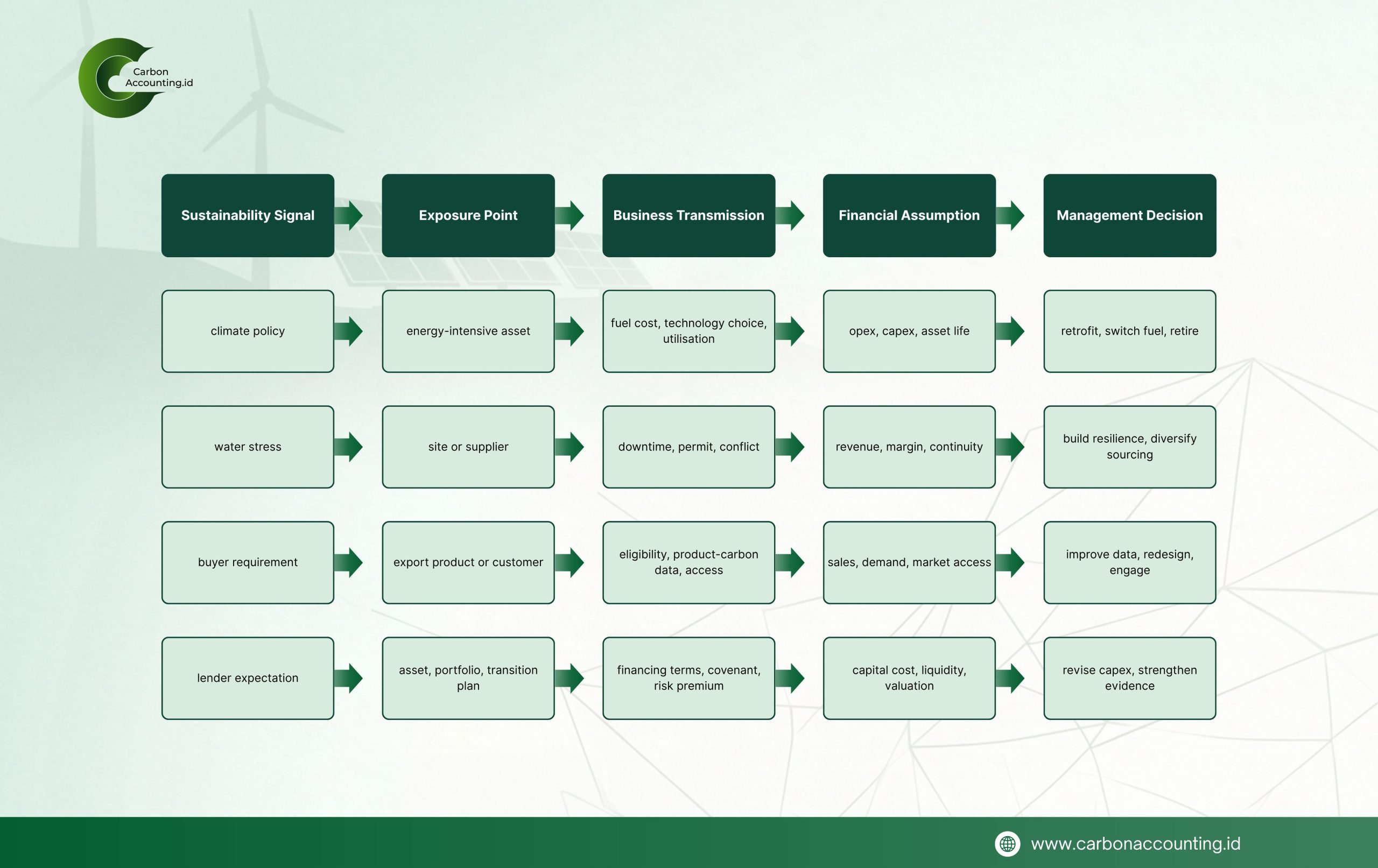
Materiality Transmission Pathway Map
Materiality is often treated as reporting, but it is really a test of consequence. The question is not whether climate, water, labour, or nature sounds important. The question is whether they can change revenue, cost, asset life, financing terms, or the business model.
Materiality begins with a pathway. Climate policy matters when it affects fuel costs, technology choices, contracts, or lender expectations. Water stress matters when it threatens plant reliability, permits, insurance, relations, or production cost.
This makes reporting more technical than many companies assume. Each issue needs to be tested by exposure, sensitivity, scale, timing, and response capacity. Exposure shows where the pressure sits. Sensitivity shows how strongly the business reacts. Timing matters because some risks are visible now, while others sit below the accounts.
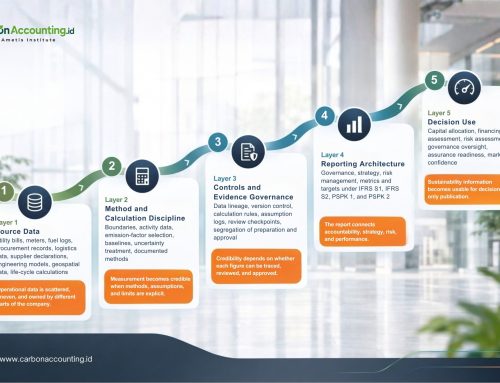
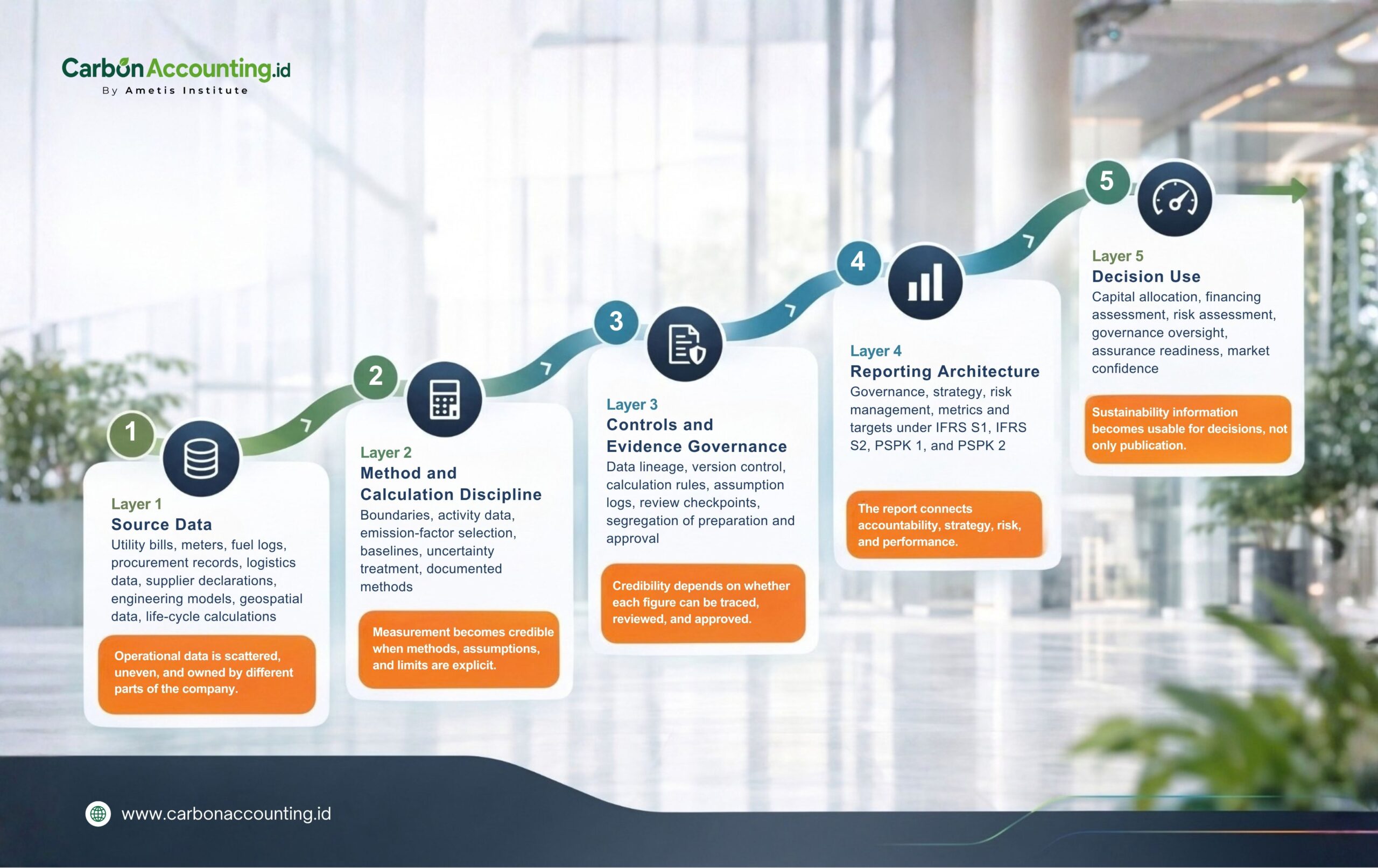
A good process separates indicators from decision variables. Emissions intensity, water withdrawal, waste, land disturbance, or supplier concentration are indicators. They become useful only when linked to pricing, capex, opex, margins, credit analysis, market access, or continuity.
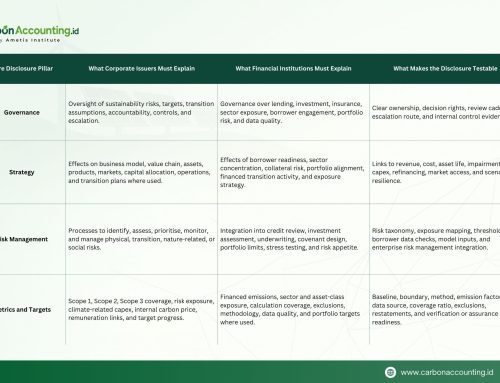
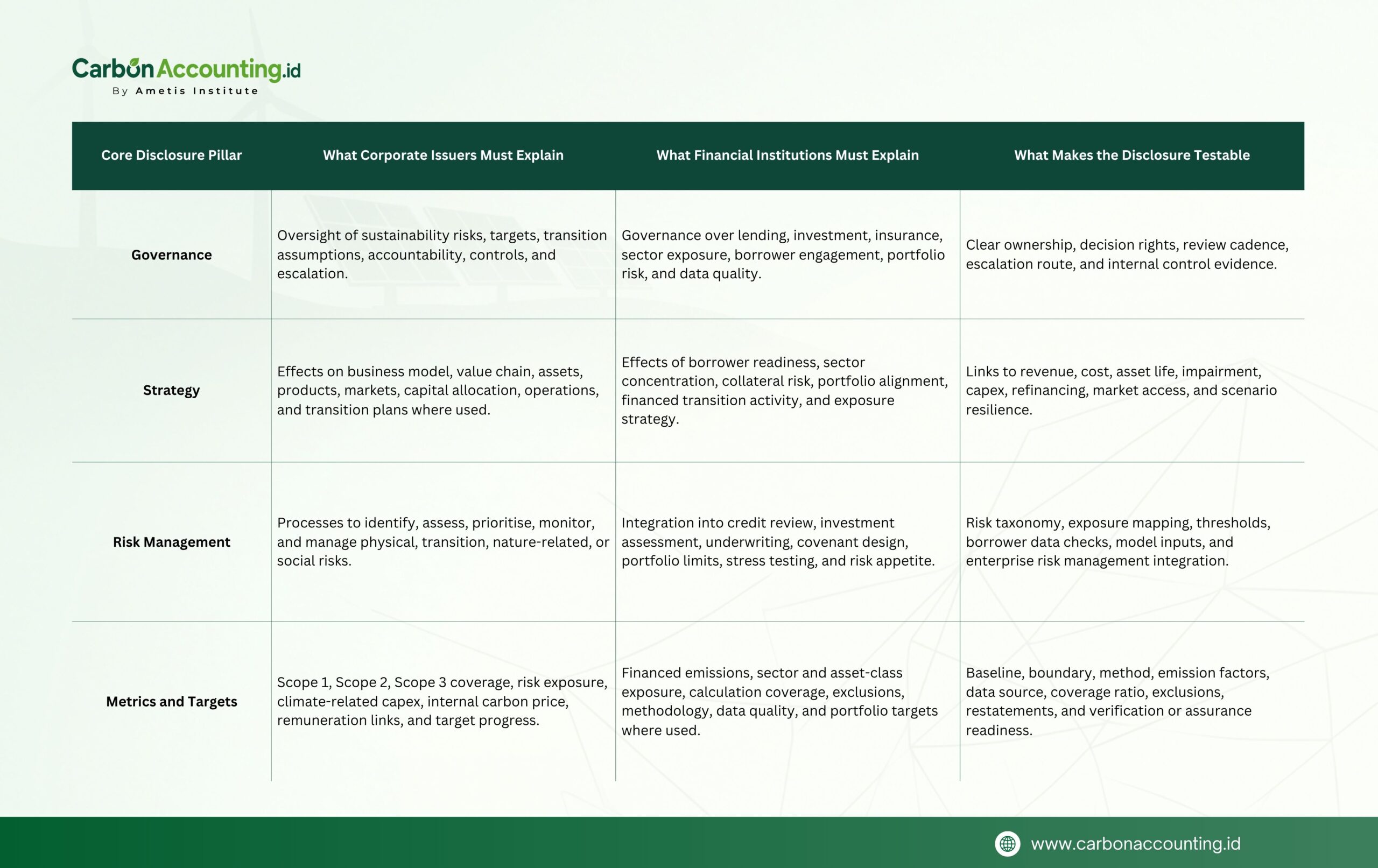
Connectivity prevents sustainability data from becoming decorative. Transition risk should appear in investment screening and asset-life assumptions. Physical climate risk should be tied to sites, routes, and suppliers, then reflected in maintenance, insurance, logistics, and reliability.
Nature and water risks need the same discipline. They should be read through sourcing areas, land-use choices, permits, ecosystem dependency, and operating limits. Many risks appear before they are monetised, often as warnings, buyer rules, engineering limits, or supplier vulnerabilities.
The weakness in many reports is not the absence of data, but the absence of traceable logic. Numbers are disclosed without financial effect. Targets are announced without capital allocation. Risks are described without assets, assumptions, time horizons, or response options.
Decision-grade sustainability data has a route into judgment. It shows where pressure comes from, which business is exposed, what assumption may change, and what decision management must consider. Sustainability matters when it stops decorating the report and starts disciplining the company.