The Missing Side of Climate Strategy: Corporate Inventory and Avoided Emissions
The Missing Side of Climate Strategy: Corporate Inventory and Avoided Emissions
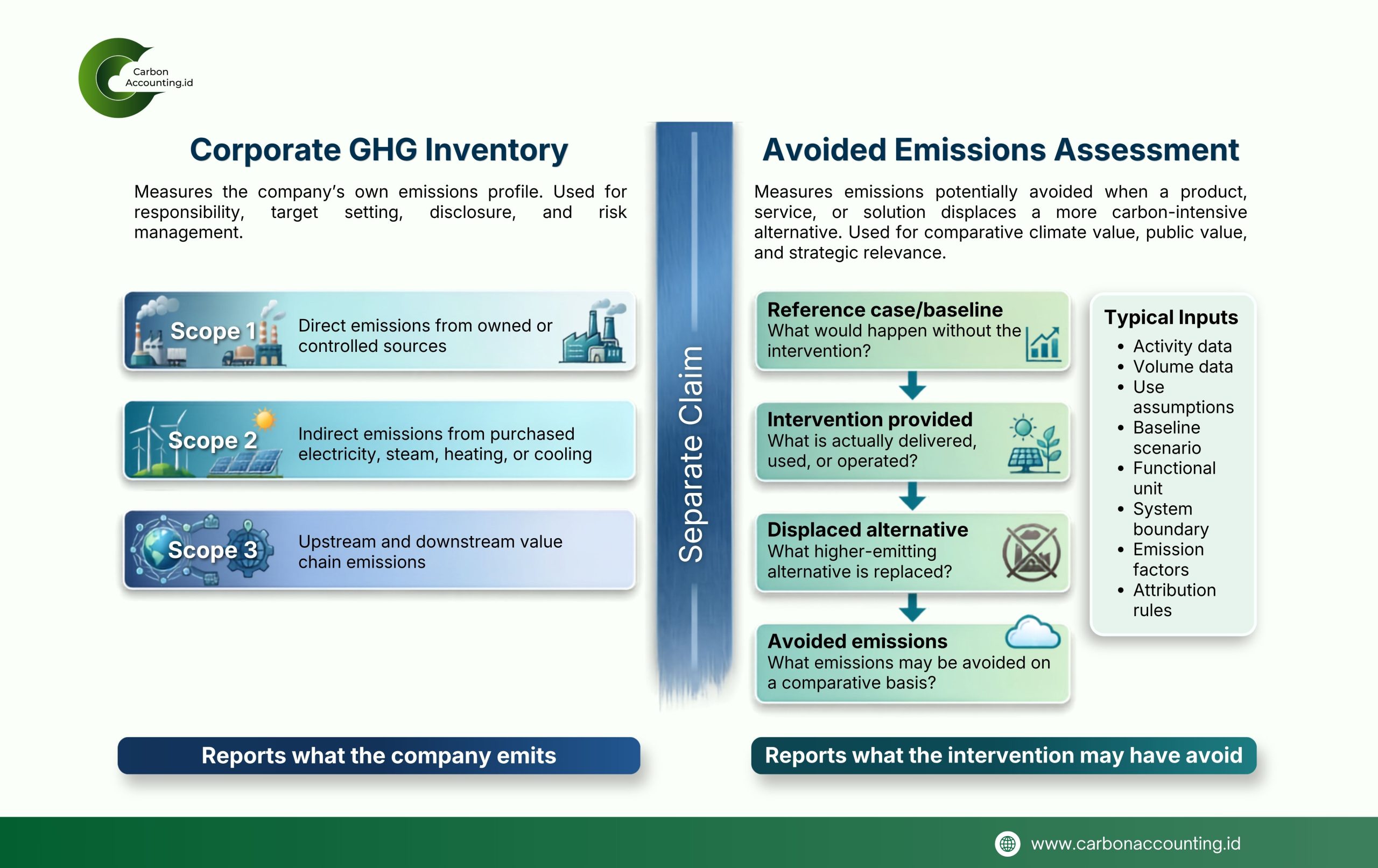
Dual Accounting Architecture: Corporate GHG Inventory and Avoided Emissions Assessment.
A serious climate strategy begins when a company stops asking only what it emits, and starts asking what its business may help the wider economy avoid.
The idea is straightforward, though often overlooked. A corporate GHG inventory measures the company’s own emissions across Scope 1, 2, and 3. Avoided-emissions assessment is concerned with something else, which is whether the firm’s offering displaces a more carbon-intensive alternative.
These two tools do not answer the same question. The inventory tells us what the company is responsible for across its operations, energy use, and value chain. Avoided-emissions assessment asks whether the company’s offering helps reduce emissions outside its own boundary through substitution.
That distinction matters because many businesses now sit inside the transition itself. Their climate relevance may not be captured fully by their footprint alone. In some cases, the larger strategic value lies in helping customers, systems, or markets move away from higher-emitting ways of producing, moving, heating, building, or operating.
This is why avoided emissions should never be folded into the inventory. It is not a deduction from Scope 1, 2, or 3, and it cannot be used to cancel out the company’s own footprint. It is a separate claim, reported beside the inventory rather than inside it.
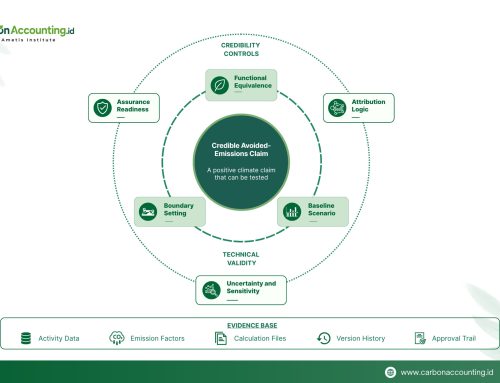
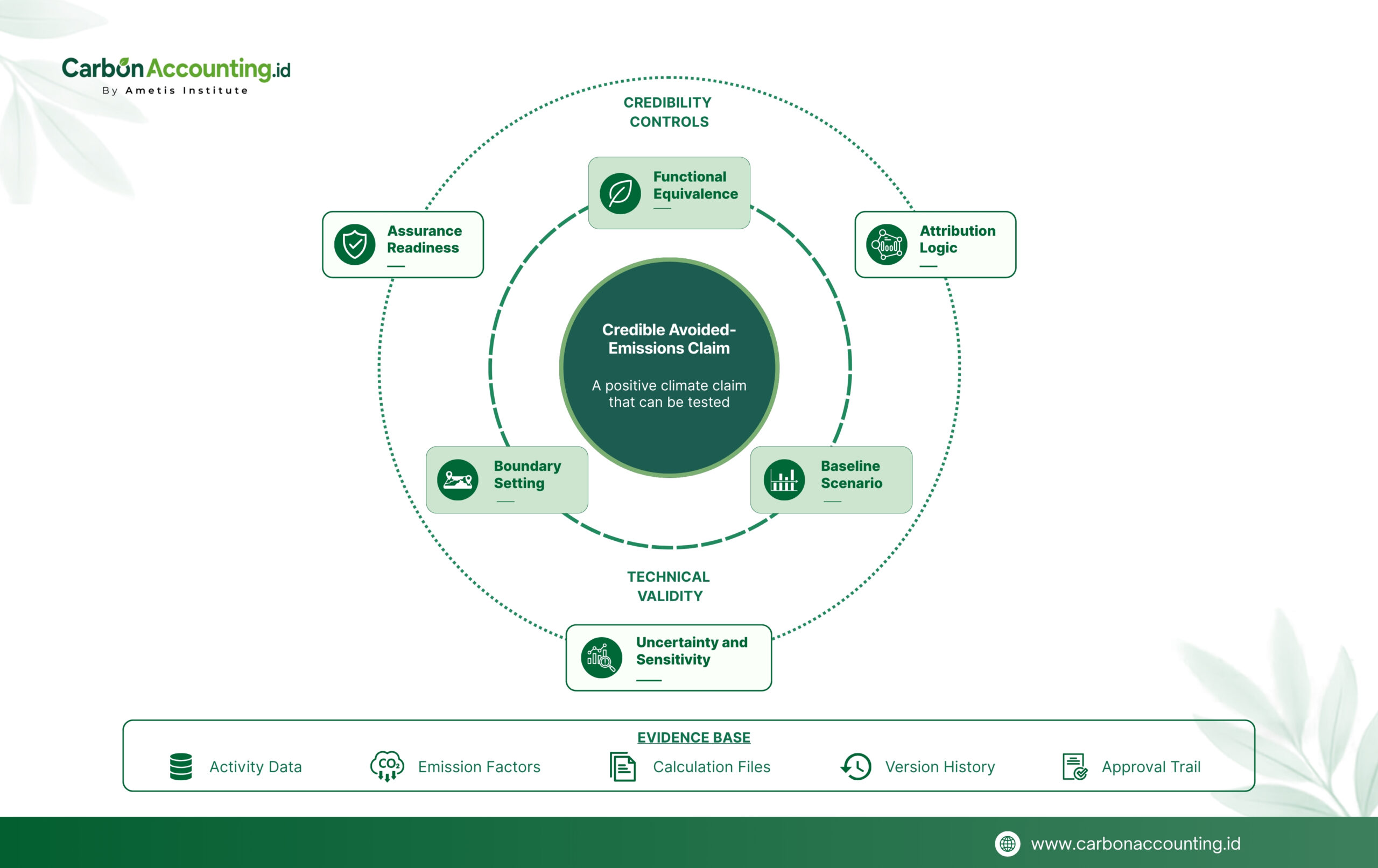
Once that separation is respected, the technical work becomes much clearer. A credible assessment depends on a reference case, a defined intervention, the higher-emitting alternative being displaced, and a comparative estimate built on evidence. That means activity data, volume data, use assumptions, system boundaries, functional units, and defensible emission factors.
This is also where weak claims tend to fail. Results can be overstated when the baseline is too favourable, when boundaries are vague, when assumptions are not tested, or when more than one actor claims the same reduction. Good practice depends on methodological discipline, current data, and clear control of double counting.
Seen this way, the inventory and the avoided-emissions assessment are not rivals. They are complementary. One tells the truth about responsibility. The other tells the truth about relevance. A company that wants to be credible in transition must be able to show both.