Sustainability Disclosure Is a Capability Test, Not a Reporting Task
Sustainability Disclosure Is a Capability Test, Not a Reporting Task
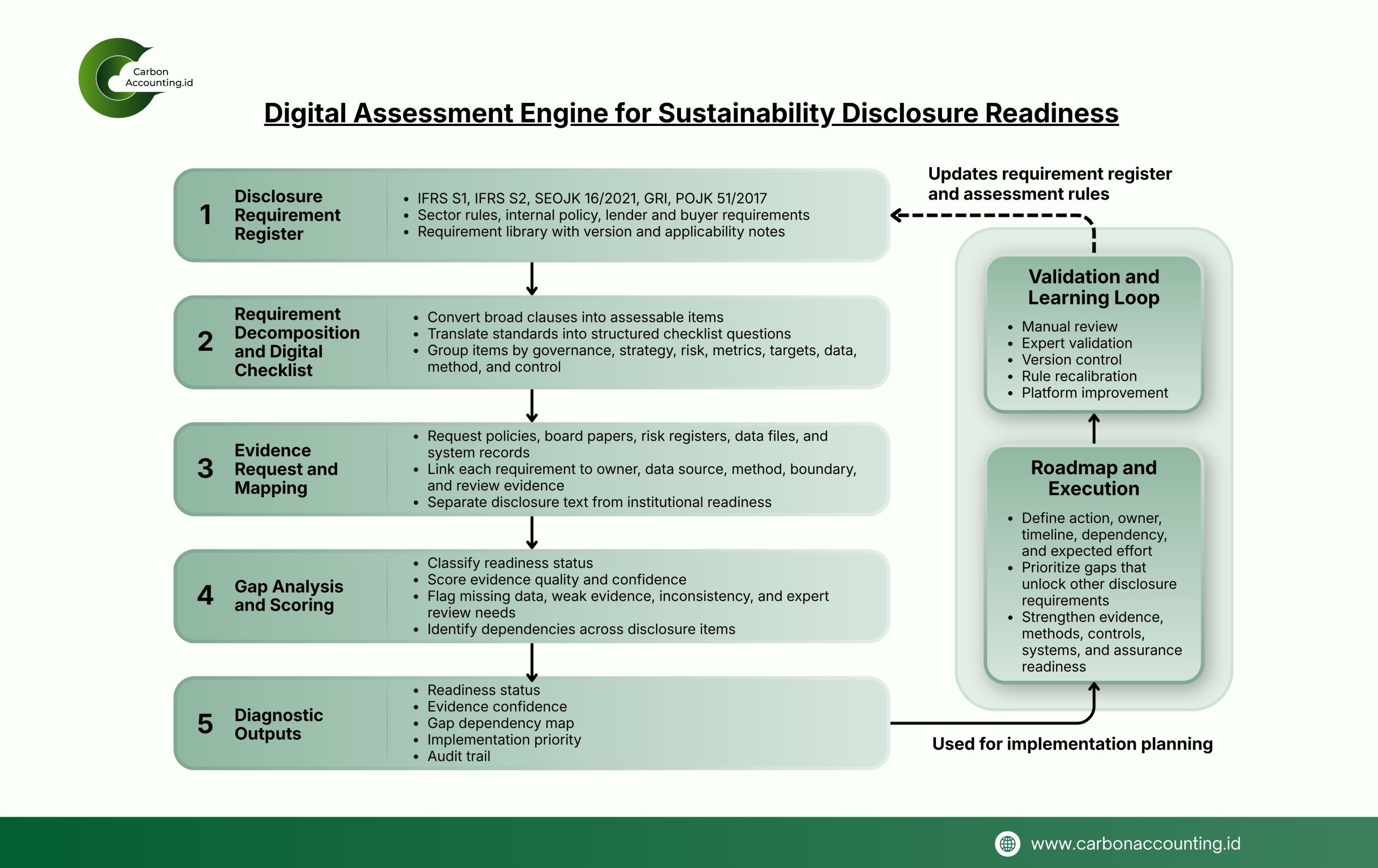
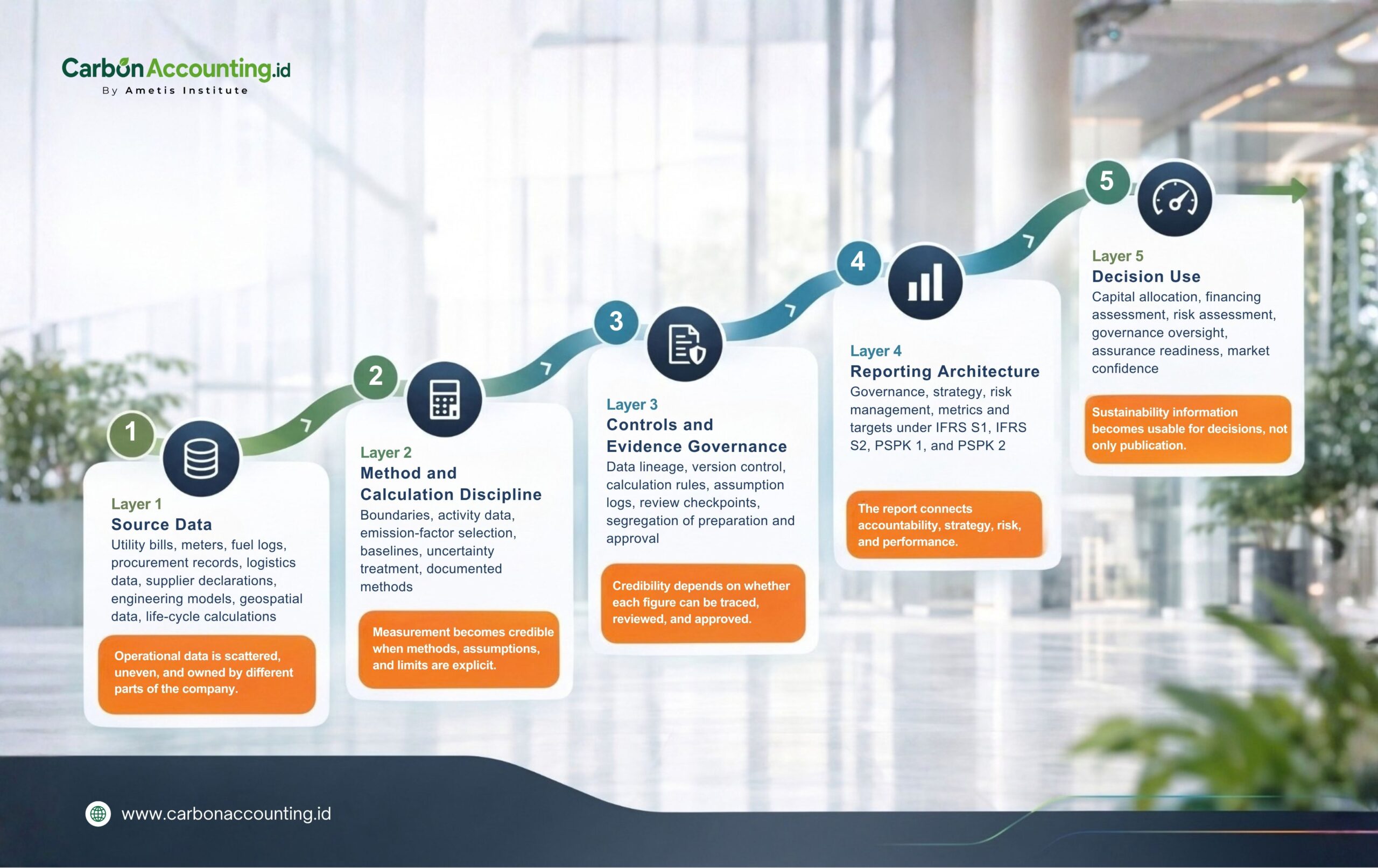
The digital assessment engine converts disclosure requirements into checklist questions, evidence requests, gap scores, and diagnostic outputs. The organization then uses those outputs to define priorities, roadmap actions, and execution plans.
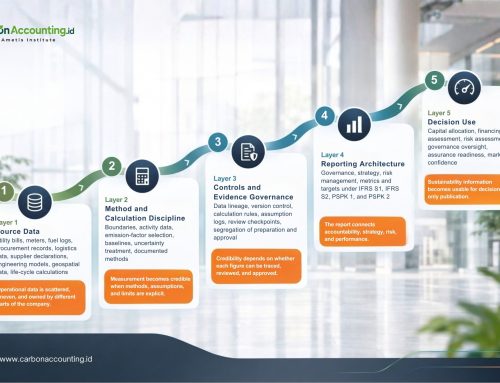
A sustainability report earns trust long before it reaches the public. Its real test lies in the governance, evidence, systems, and discipline that decide whether each claim can stand.
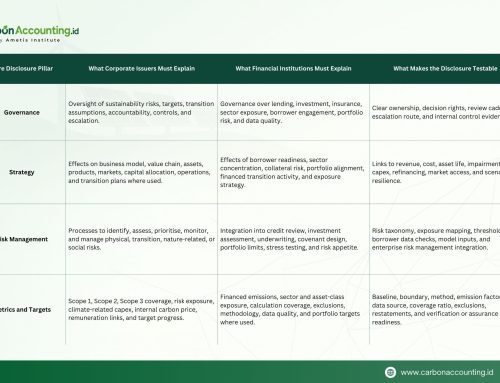
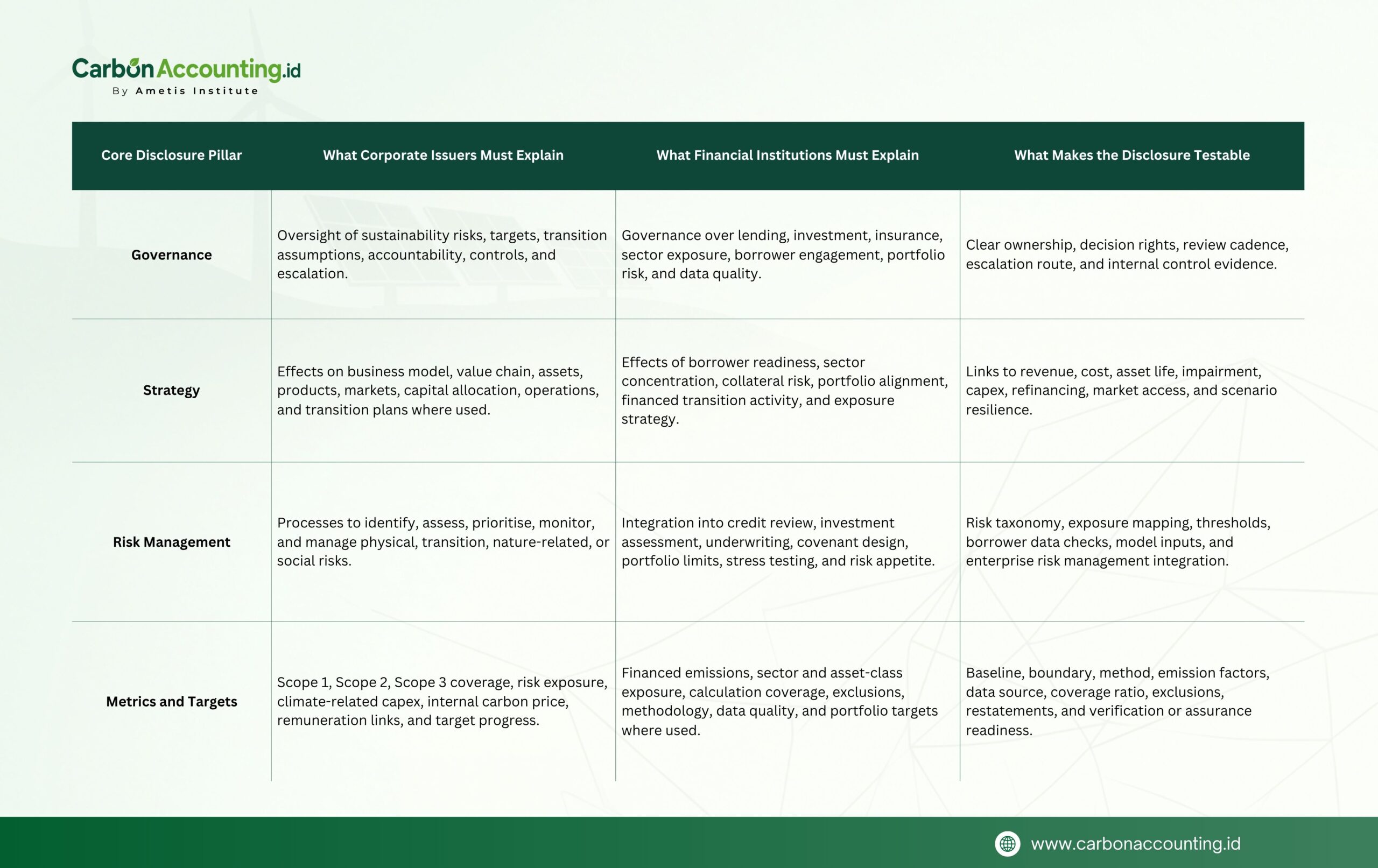
Many companies still treat sustainability and climate disclosure as a reporting task. In reality, it is a capability test. IFRS S1, IFRS S2, SEOJK No. 16/SEOJK.04/2021, GRI, and other references ask whether governance exists, risks are understood, metrics are consistent, targets are credible, and sustainability is linked to strategy and financial consequences.
This is why readiness diagnostics matters. A company needs to know which disclosure elements are supported by evidence, which are incomplete, and which are absent because the underlying process has not yet been built.
A diagnostic process turns broad requirements into practical questions. Does the board receive structured sustainability and climate information? Are responsibilities clear? Are climate risks linked to enterprise risk management? Are emissions data, supplier data, and financial assumptions documented?
The final report cannot answer those questions by itself. Some companies have policies, data systems, and records. Others have information, but not yet in the form required by the standard. Some still rely on narrative where evidence, methods, and controls should exist.
A digital assessment platform can make this work more systematic. Using a disclosure requirement register, it links each requirement to policies, risk processes, data architecture, metrics, targets, owners, methods, and reporting practice. It shows whether disclosure is ready, partial, absent, or still requires verification.
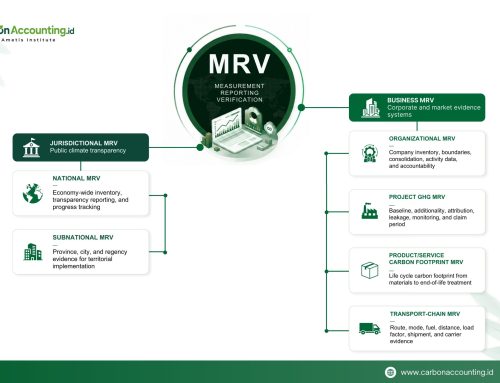
The most useful output is not a simple score. It is a gap analysis that explains missing evidence, responsible functions, effort, and dependencies. A climate risk gap may require scenario analysis and asset data. A Scope 3 gap is rarely just a missing number. It often sits in supplier data, category choices, factors, and boundaries.
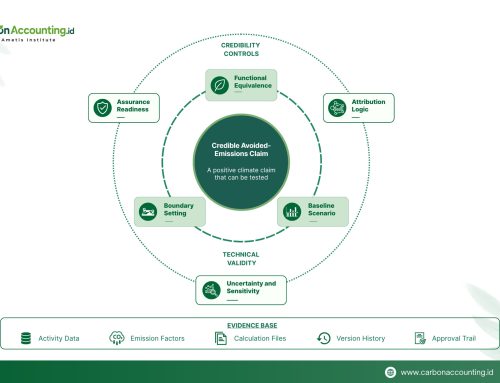
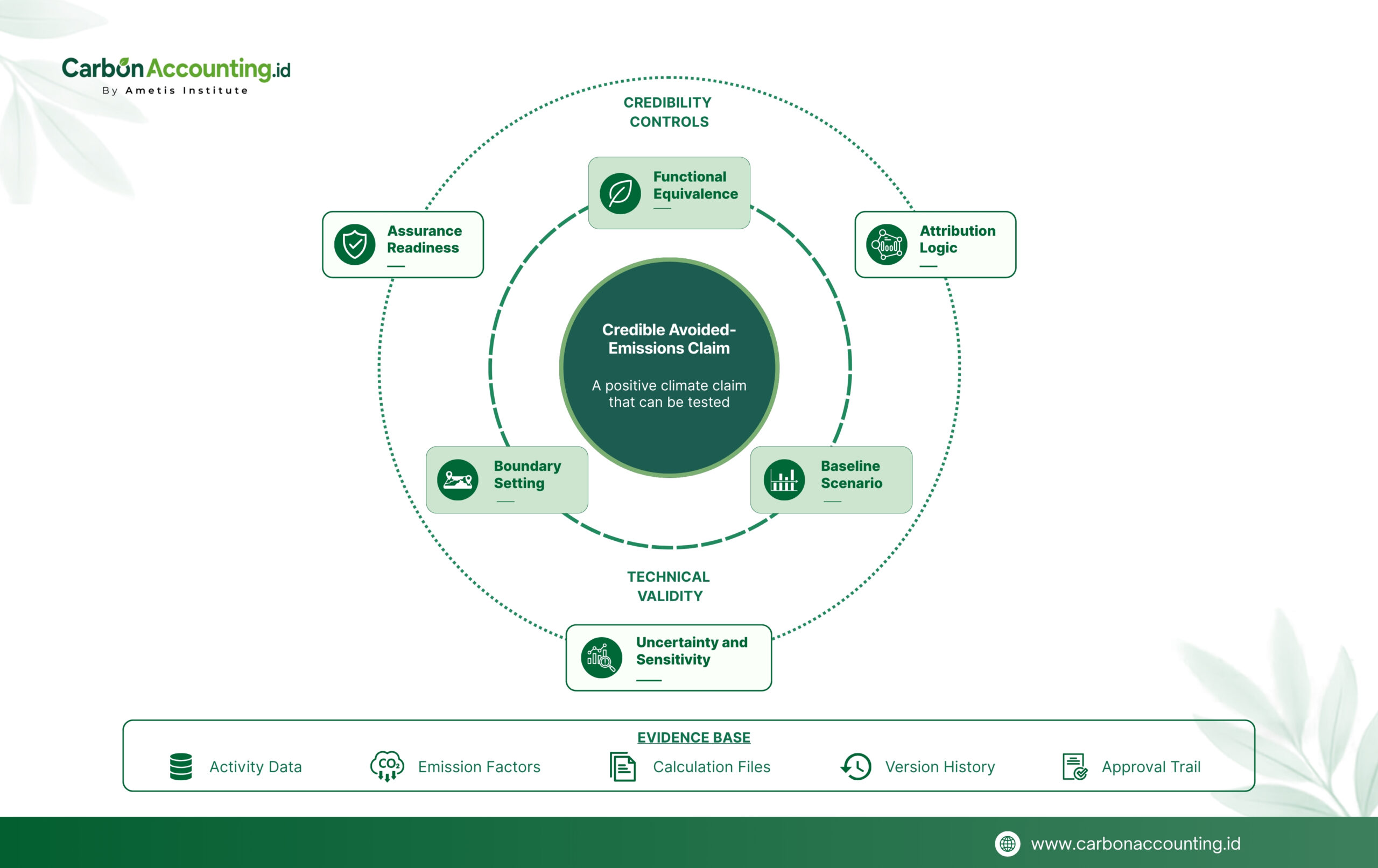
Technology can accelerate the reporting process, but credibility still depends on readiness. Credible claims need governance, data ownership, methods, and controls behind them. The company that understands its own readiness can disclose better, decide faster, and change with purpose.