Nature Scenario Analysis Is Becoming a Real Test of Strategic Resilience
Nature Scenario Analysis Is Becoming a Real Test of Strategic Resilience
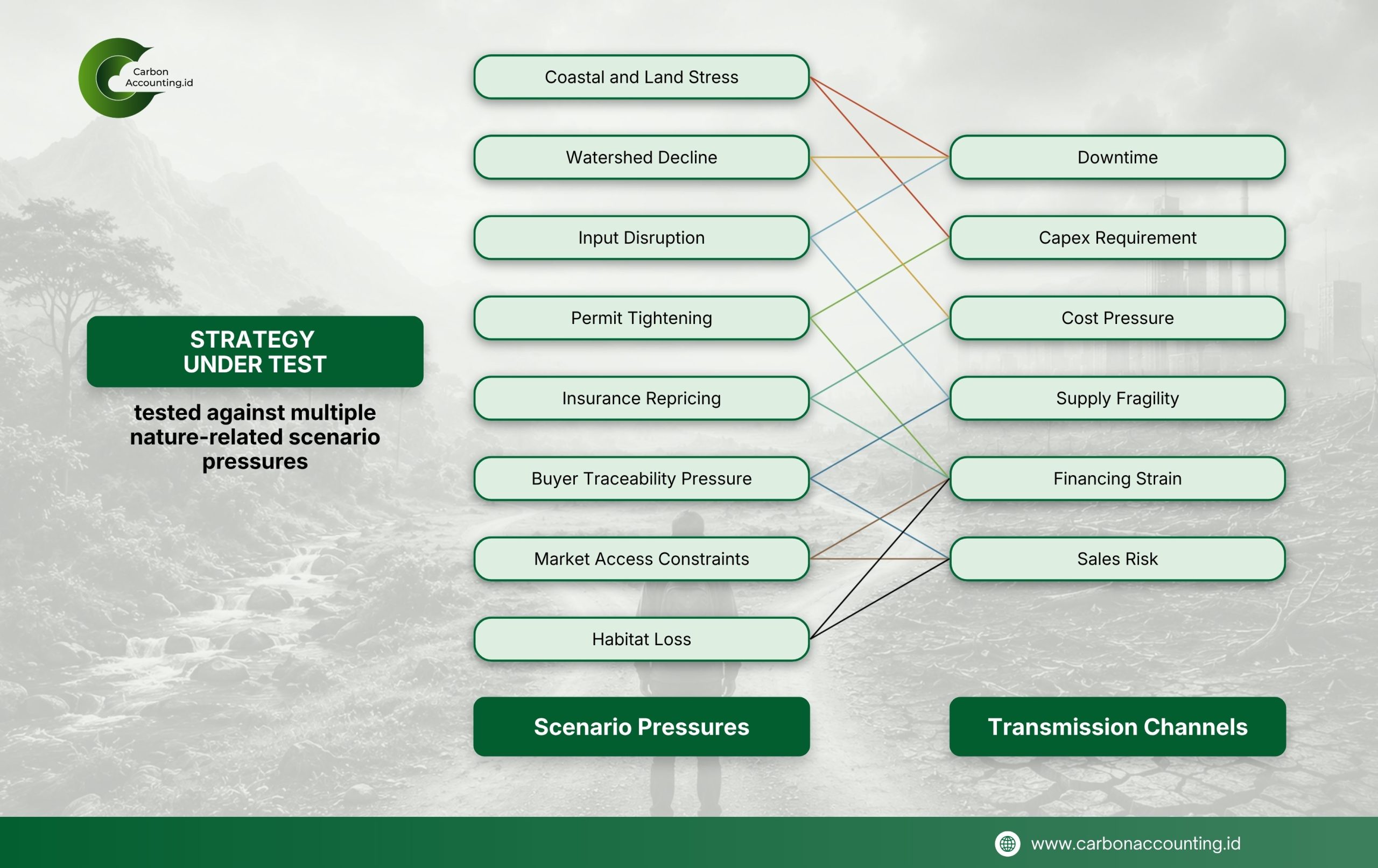
Nature Scenario Analysis Through Business Transmission Channels
A strategy reveals its character not when nature is kind, but when the landscape begins to withdraw its generosity.
That is why nature scenario analysis matters. It is not a longer register of environmental risks. It is a way to test whether a business can still stand when ecosystems weaken, rules tighten, and markets demand more than they did before.
TNFD places this question in the strategy pillar for a reason. The real issue is not only whether a firm has nature-related exposure, but whether its strategy remains resilient when different futures are considered.
This is where the work becomes more demanding. Nature does not behave like one tidy global variable. Nature-related pressure does not arrive evenly across the business. It tends to emerge in specific locations, then work its way into sourcing, operating costs, financing, and market access.
That is why scenario analysis should begin with priority locations identified through LEAP (Locate, Evaluate, Assess, Prepare), rather than with broad assumptions at company level. From there, the company builds a small set of plausible scenarios. One may involve declining watershed quality and higher treatment costs. Another may combine tighter land use controls with stronger traceability demands from buyers.
The analysis then turns on three questions. Where is the exposure. How sensitive is the business model. How much adaptive capacity still remains. That means testing effects on volume, cost, downtime, investment needs, insurance, financing, and sales, then asking which responses are still feasible under each scenario.
This is also where monetary valuation becomes more useful. Valuation can estimate what an environmental dependency or impact may be worth today. Scenario analysis goes further by asking how that value changes when ecological conditions worsen or customer and policy expectations shift.
It also exposes a practical limit. A firm cannot test resilience well if it cannot trace where risk sits inside products, suppliers, and material flows. Once management asks which input, shipment, or market fails first under a harsher nature scenario, traceable product-level information stops being optional.
In the end, nature scenario analysis asks a harder and more honest question. Not whether the company has noticed nature, but whether its strategy can still endure when nature changes the terms.