Why Climate Delay Is More Expensive Than It Looks
Why Climate Delay Is More Expensive Than It Looks
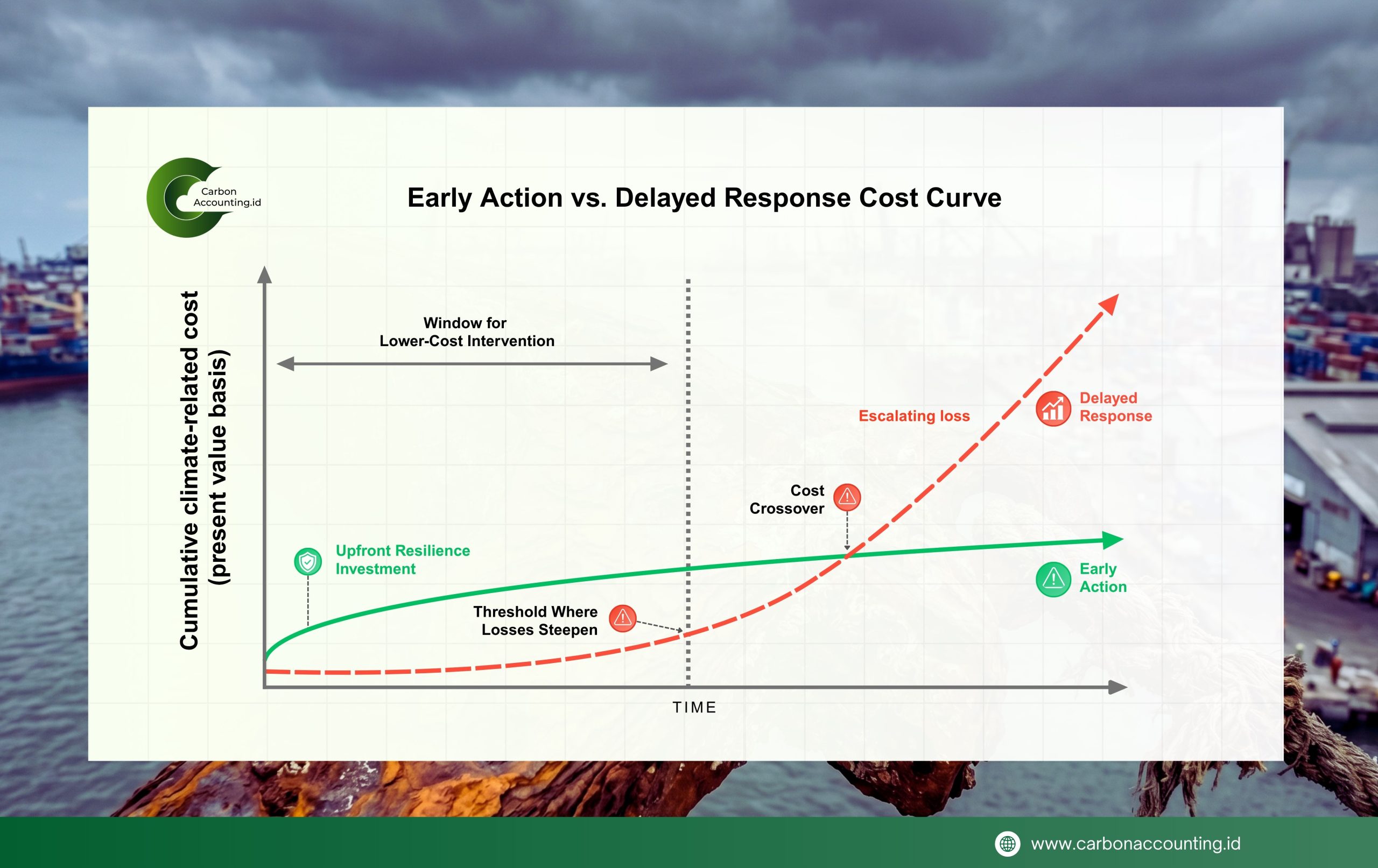
The Price of Waiting: Early Action and Delayed Response Under Climate Risk
The cost of climate risk rarely arrives like thunder. More often, it gathers in silence, in assets left exposed, in operations stretched thin, and in plans built on conditions that are no longer as dependable as they once seemed.
That is why climate risk is not only a story of hazard. It is also a story of timing. Floods, heat, fire, supply chain fragility, and transition pressure may look like separate issues, but they often lead to the same managerial failure, action taken too late.
The economics are not mysterious. A firm is weighing money spent today against losses that may become much larger tomorrow. That calculation is broader than visible damage to buildings or equipment. It must also include downtime, repair and replacement, lost revenue, insurance changes, and the possibility that recovery takes longer than expected.
What makes waiting so misleading is that climate damage does not always grow gradually. Conditions can appear tolerable until a flood reaches the wrong elevation, a heat episode lasts longer than expected, or fire interrupts a critical route. Once that threshold is crossed, losses can travel well beyond the immediate site, affecting labour, deliveries, commercial obligations, and the pace at which revenue is earned.
This is why waiting does not simply postpone cost. It can turn orderly investment into reactive spending. Measures that might have been relatively focused earlier, such as drainage upgrades, equipment elevation, passive cooling, fire buffers, water storage, or local warning systems, may later give way to redesign, relocation, or emergency engineering under pressure.
Resilience therefore becomes meaningful only when it is built into the way the business is run. The real questions are practical. Which assets are indispensable. How much downtime can the business absorb. How quickly must recovery occur. Which measures reduce risk in a way that justifies the cost.
There is also a finance story here. Repeated disruption can lower utilization, shorten economic life, and weaken the assumptions used in valuation. It can also change how insurers, lenders, and investors read the firm. Adaptation is not only about preventing damage. It is also about protecting earnings quality, asset value, and financing credibility.
Climate risk enters the firm through many doors, but it often reaches the same destination, weaker performance, more fragile cash flow, and fewer good choices. The real price of waiting is not only what is damaged. It is the time, judgment, and strategic freedom that are hardest to recover once they are gone.