Lessons from Cyclone Senyar for Corporate Sustainability
Lessons from Cyclone Senyar for Corporate Sustainability
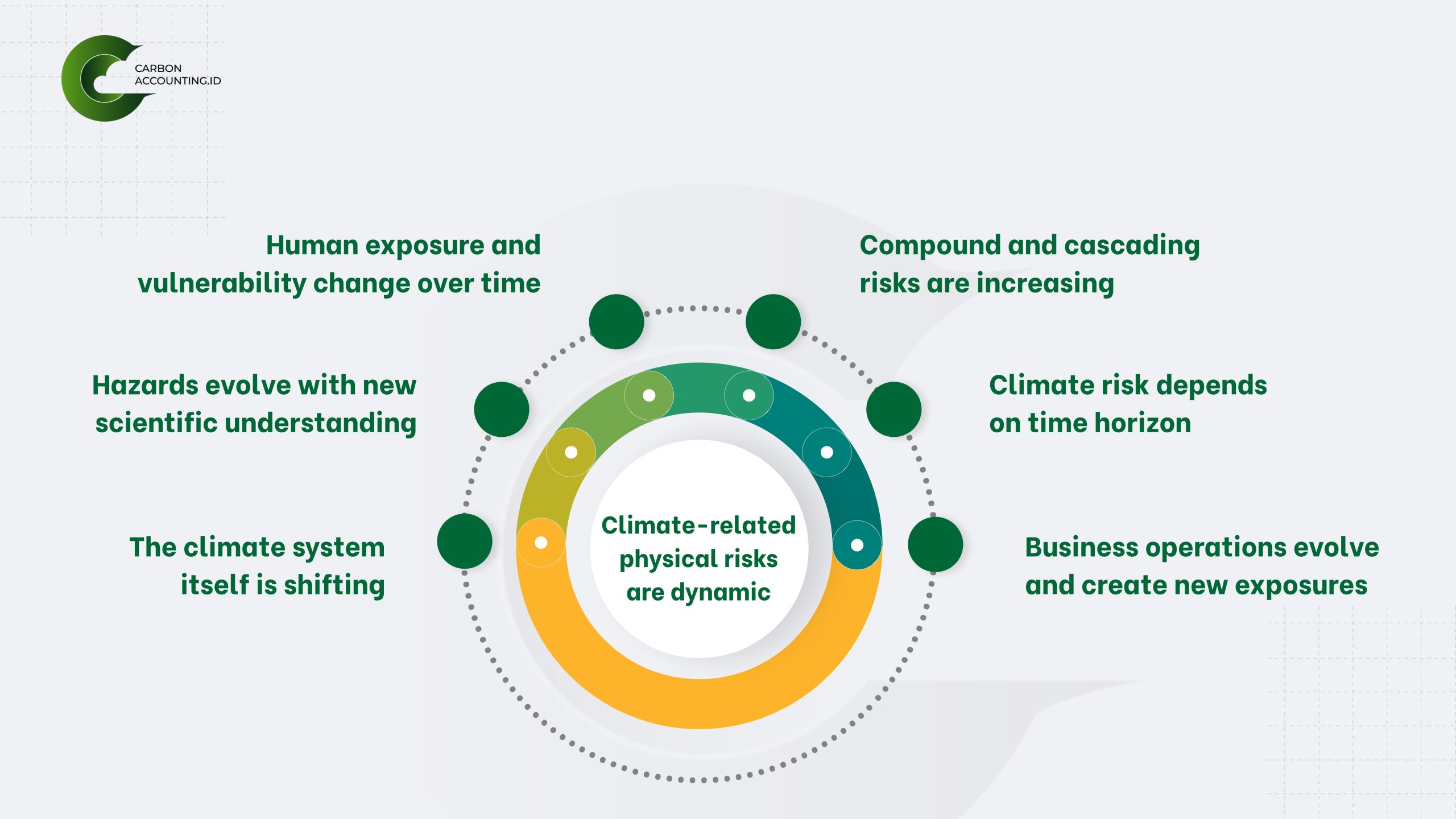
Why are climate-related physical risks not static but dynamic?

Cyclone Senyar challenges the long-held belief that tropical cyclones are almost impossible to form near the equator.
Back in geography class, many of us were taught a comforting “rule of thumb”: tropical cyclones almost never form near the equator. The logic sounded neat and tidy. The Coriolis effect is simply too weak around 0° latitude. Without sufficient rotational force, air masses struggle to organize into a spinning tropical storm. Tropical Storm Vamei in 2001, which formed around 1.4° North, was treated in textbooks as a fascinating but freak anomaly, something to be admired in diagrams rather than feared in real life.
Cyclone Senyar, which appeared in the Strait of Malacca in late November 2025 with its center around 5° North, unsettles that comfortable narrative. This was not a theoretical anomaly buried in a journal article. It was a deadly hydrometeorological disaster that hit Aceh, North Sumatra, and West Sumatra regions that, in our old mental map, sat in a sort of “safe buffer” from tropical cyclones. At CarbonAccounting.ID, watching this unfold felt less like witnessing an isolated event and more like seeing a boundary on the climate-risk map quietly shift.
This naturally triggers a big question: has climate change begun to alter the “rules” of where tropical cyclones can form and intensify? Is the probability of cyclone formation creeping closer to the equator and will that probability continue to rise in the coming decades? Recent scientific papers have started to explore this hypothesis. As researchers and technology developers in sustainability, we are careful not to overstep. The definitive answers must come from meteorologists, climatologists, and atmospheric scientists working with long-term data and the latest climate models.
Yet, if this emerging hypothesis proves correct, the implications for Indonesia are profound. We are no longer dealing with a simple dichotomy of “typhoon-prone countries” out there and “cyclone-safe Indonesia” in here. Instead, the potential footprint of tropical cyclones appears to be expanding toward our own coastline and economic centers. Ports, industrial zones, logistics hubs, and critical infrastructure that never seriously considered cyclone risk may now find themselves inside a new, uncomfortable zone of uncertainty.
For corporations, this means it is no longer sufficient to treat tropical cyclones as a distant, theoretical hazard. Physical risk analysis modules need a serious update. Traditional checklists (forest and land fires, heat waves, floods, volcanic eruptions, earthquakes, tsunamis) must be expanded to include contemporary risks such as tropical cyclones forming closer to the equator and compound events like cyclones interacting with tidal floods and sea-level rise. They are parameters that can reshape asset valuations, insurance costs, supply chains, and project feasibility.
Going forward, these evolving physical risks will sit side by side with financial figures in sustainability and climate-related financial disclosures. For us at CarbonAccounting.ID, Cyclone Senyar is more than a meteorological story. It is a signal that corporate Indonesia needs to rethink how it defines, measures, and discloses climate risk. The science will continue to refine the probabilities. In the meantime, boards and management teams cannot afford to wait for perfect certainty. Updating risk models, engaging with scientific expertise, and integrating these emerging hazards into governance and investment decisions is no longer optional. It is part of responsible, forward-looking corporate stewardship in a changing climate.