Turning Complexity Into Credibility: Why Oil & Gas Needs Smarter MRV
Turning Complexity Into Credibility: Why Oil & Gas Needs Smarter MRV
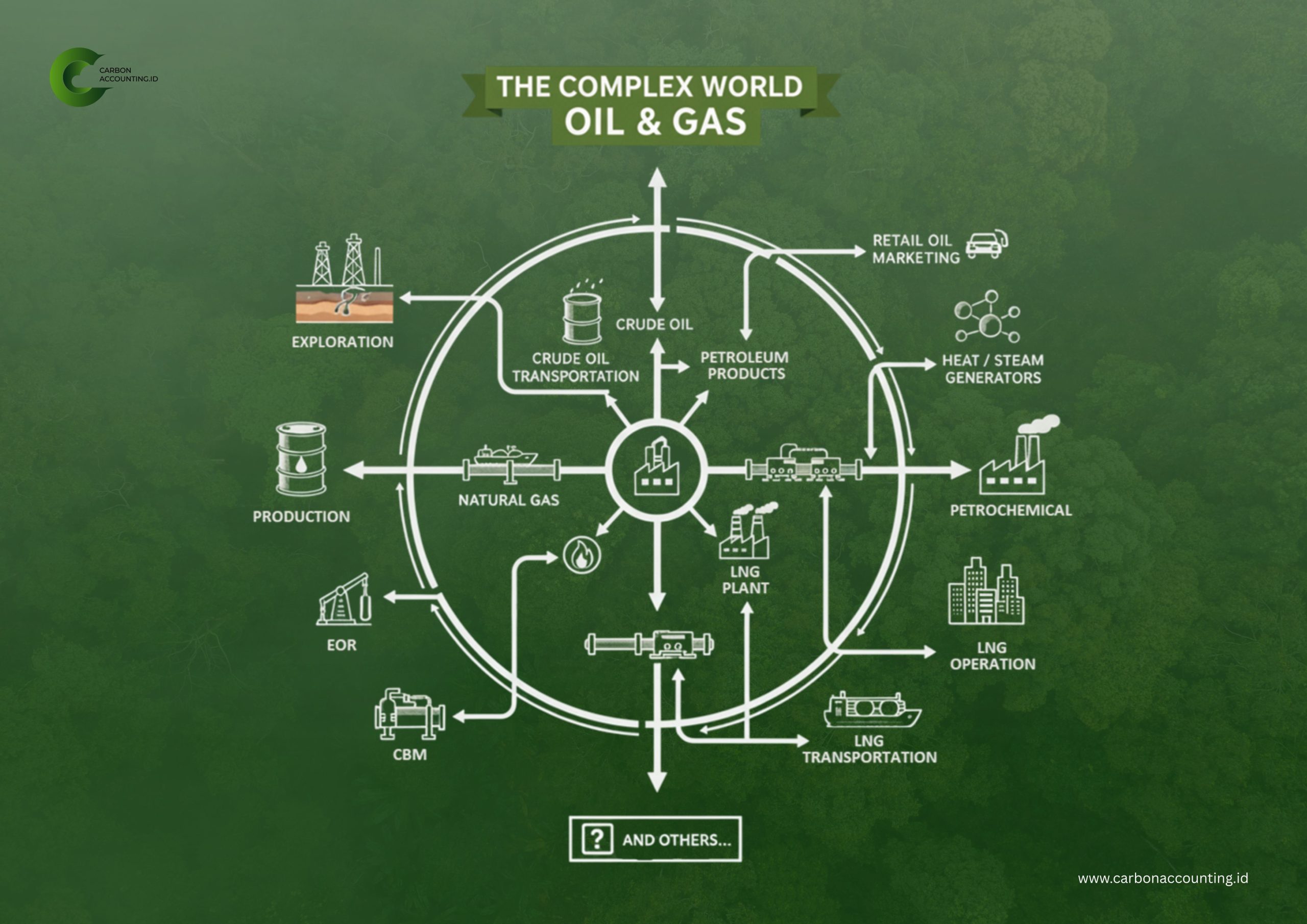
The oil and gas industry is highly complex, spanning the value chain from upstream (exploration and production) to downstream (refining and retail marketing).
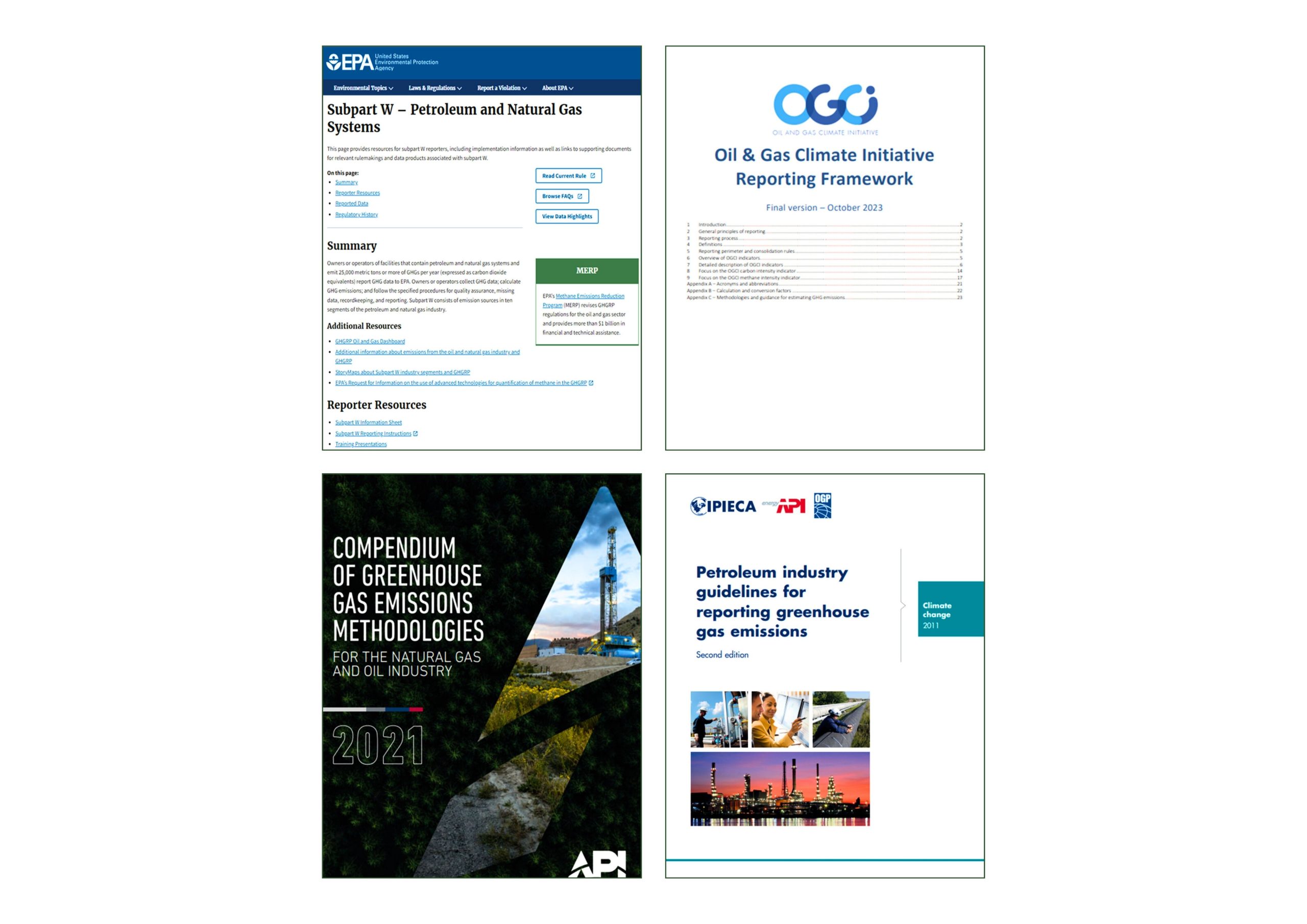
There are numerous detailed guidelines and frameworks for reporting and inventorying GHG emissions in this sector. The breadth and depth of these requirements make implementation challenging.
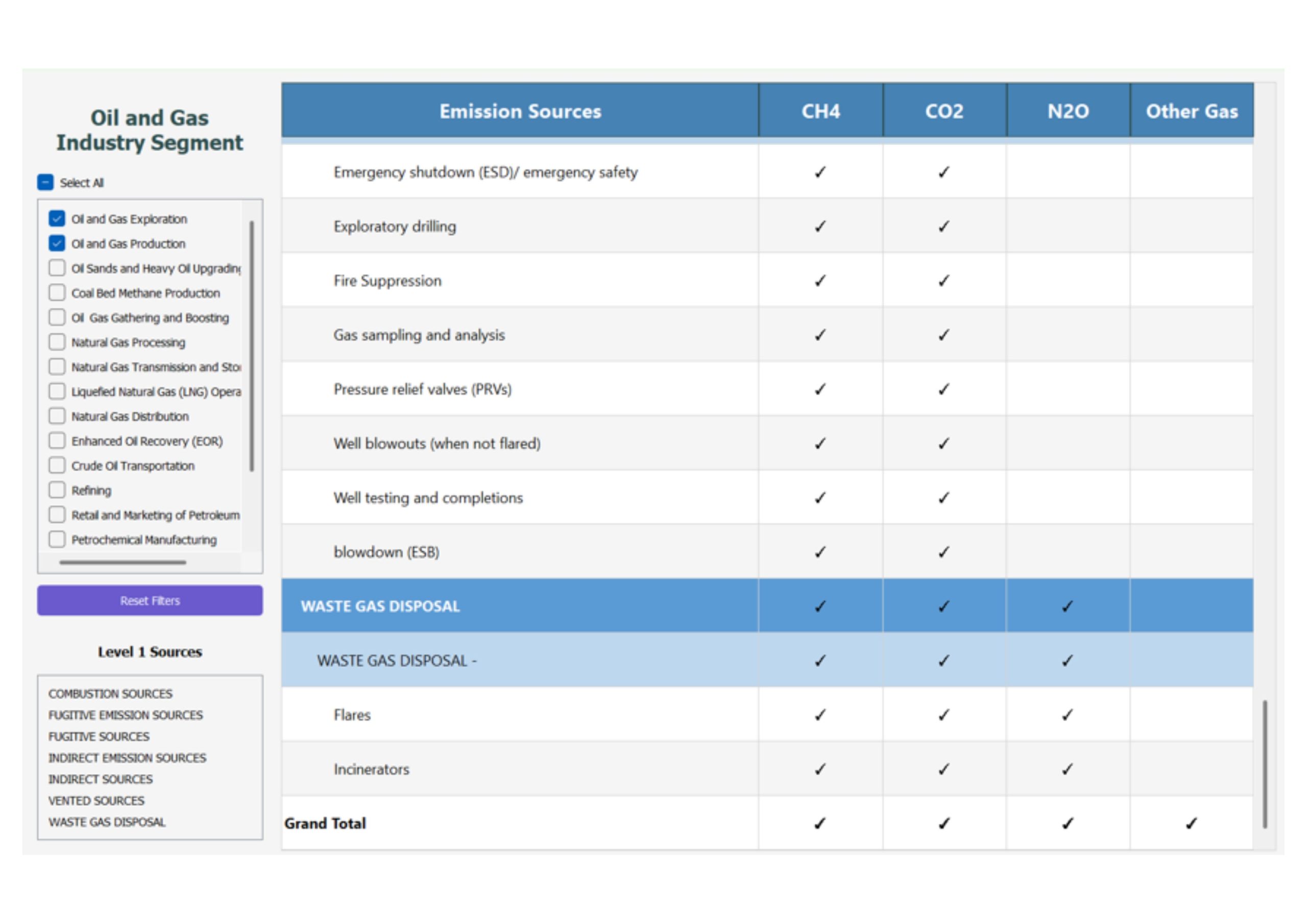
Because of its complexity, a dedicated information system is needed to help companies calculate oil- and gas-specific GHG emissions. For example, in the exploration and production subsector, there are 54 distinct emission types.
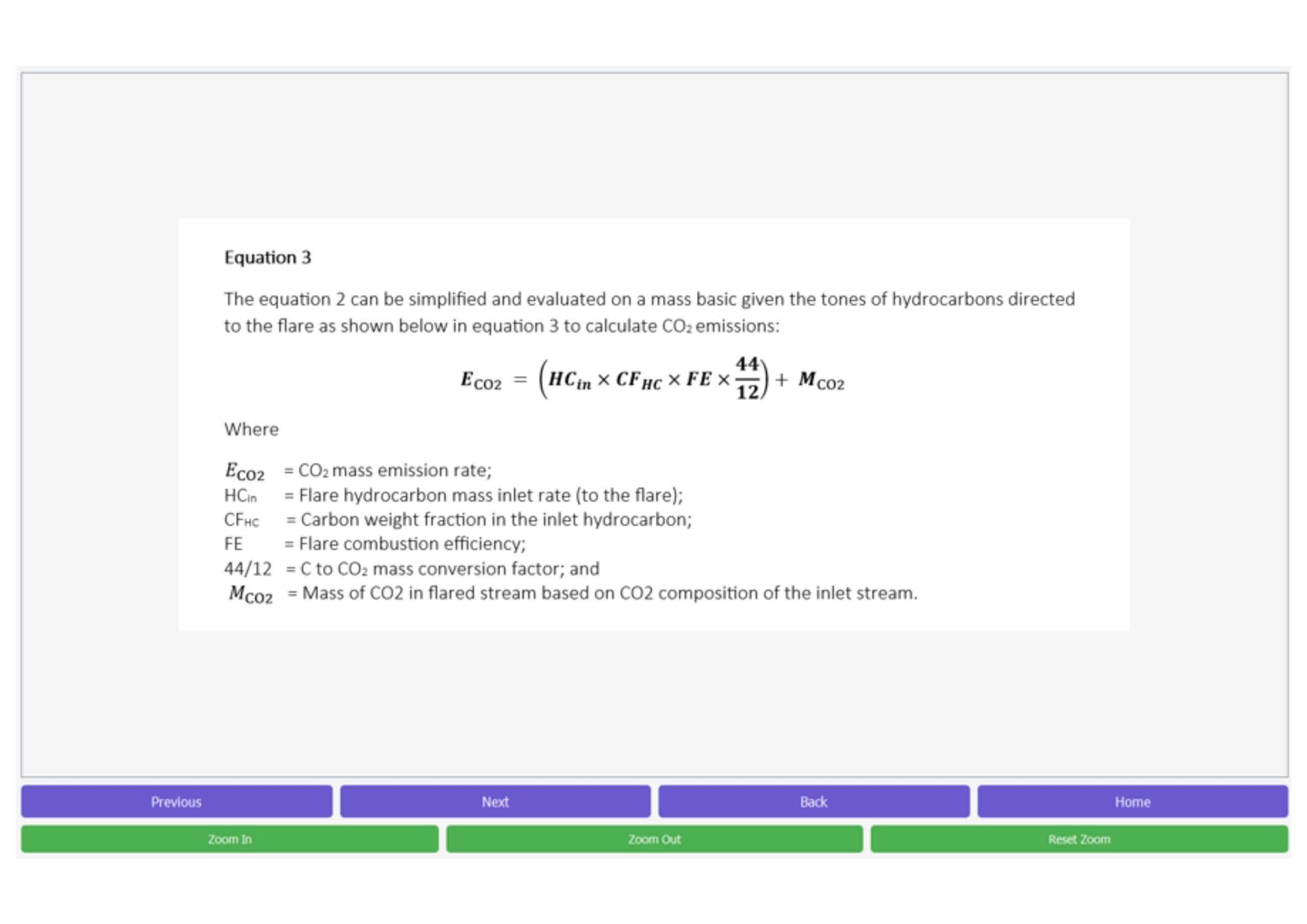
Our information system helps oil and gas companies calculate sector-specific emissions using the correct methods, aligned with a standardized methodological hierarchy and the available data.
At CarbonAccounting.ID, we have learned that industry-specific emissions are where GHG accounting becomes hardest and most consequential. The obstacles are familiar to practitioners but often invisible to decision-makers: wildly diverse processes even within a single sector, overlapping and intermittent sources, non-CO₂ gases that are technically demanding to measure, patchy activity data with uneven accuracy, and emission factors that must be tailored to context rather than copied from a handbook. Counting carbon, in other words, is never just arithmetic, it is systems engineering.
Nowhere is that complexity more concentrated than in oil and gas. The sector’s footprint runs from upstream exploration and production to downstream refining and retail marketing, with distinct operations, gases, and data realities at every step. Guidance exists in abundance, so do frameworks, such as API compendium, IPIECA guideline, O&G framework, etc. Yet the very breadth and granularity of those materials can stall implementation on the ground. In the exploration and production subsector alone, companies confront roughly 54 types of specific emissions, each with multiple calculation pathways and its own procedure for selecting the appropriate method.
That fractured landscape is why we built an information system designed expressly for oil-and gas-specific emissions. Rather than force operators into generic spreadsheets, our platform mirrors the sector’s operational logic: asset class, process unit, gas stream, and data quality feed into transparent method recommendations. The system aligns with recognized standards, adapts to diverse business models, and works with the data organizations actually have, while documenting assumptions, flagging gaps, and elevating higher-tier methods when evidence allows.
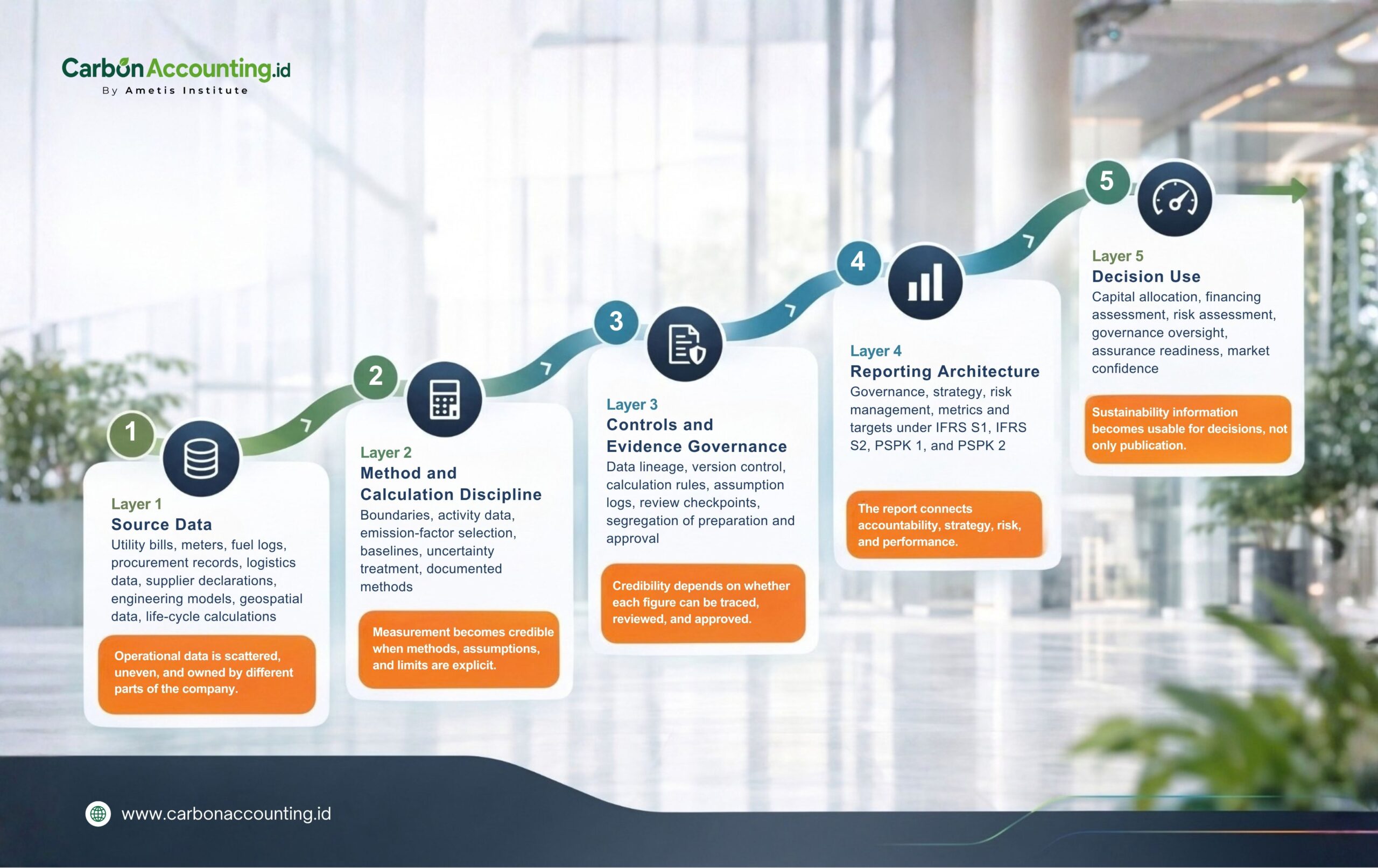
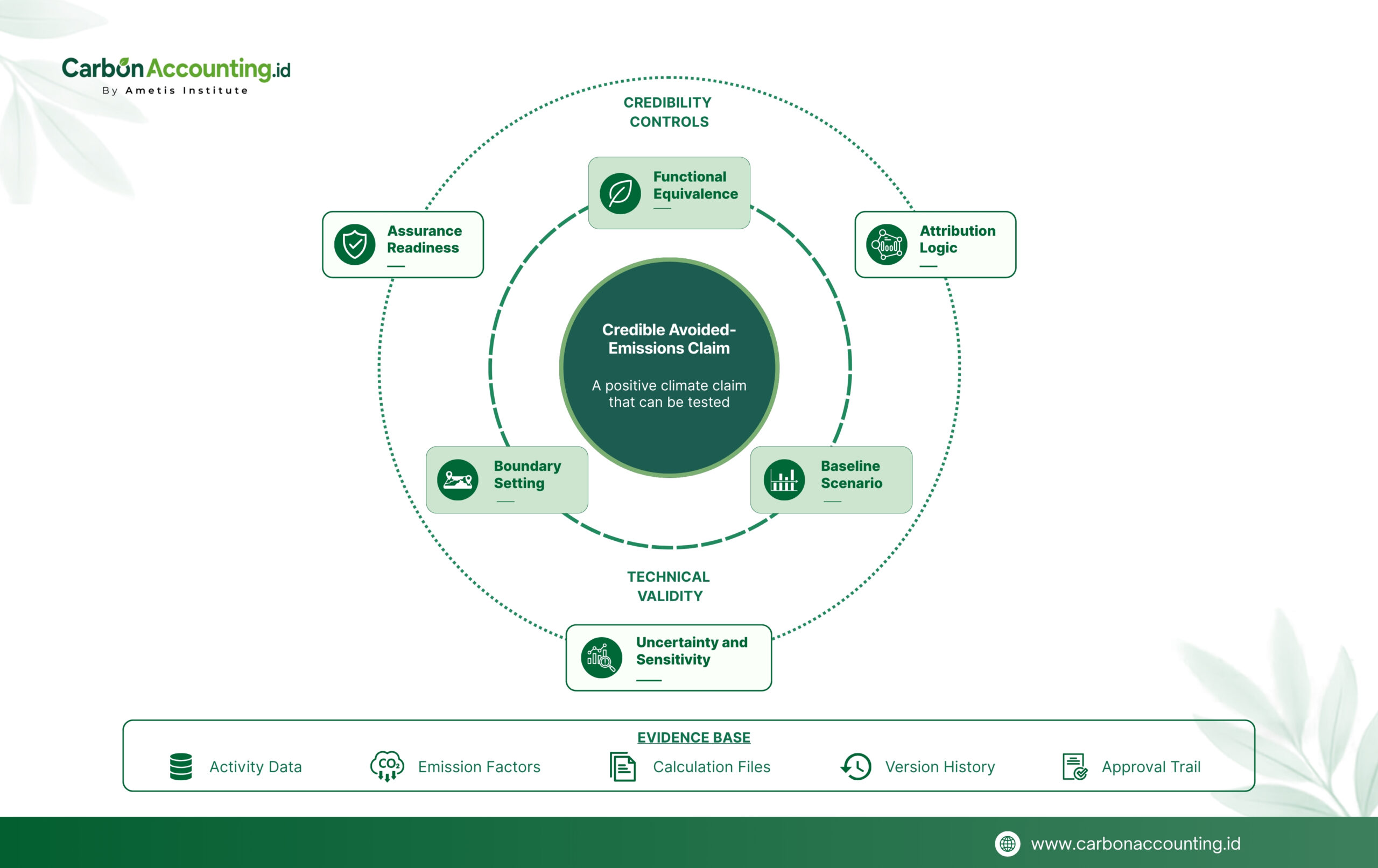
We are explicit about what we will not do: oversimplify to make the numbers look neat. Collapsing categories or averaging away uncertainty may deliver tidy dashboards, but it undermines the principles that make inventories decision-grade: accuracy and completeness. In our experience, credibility is earned by tracing every figure to its source, presenting uncertainty honestly, and inviting verification through clear documentation and audit trails.
The aim is practical and urgent: reliable, defensible results that regulators can audit, investors can trust, and engineers can act on. By pairing sector-aware logic with disciplined data governance, CarbonAccounting.ID turns complexity from a barrier into a backbone, so oil and gas operators can quantify what they emit, prove what they reduce, and plan what comes next with confidence.