Building Low-Carbon Healthcare: IHC’s Pelni Hospital Leads Indonesia’s GHG Inventory Pilot
Building Low-Carbon Healthcare: IHC’s Pelni Hospital Leads Indonesia’s GHG Inventory Pilot
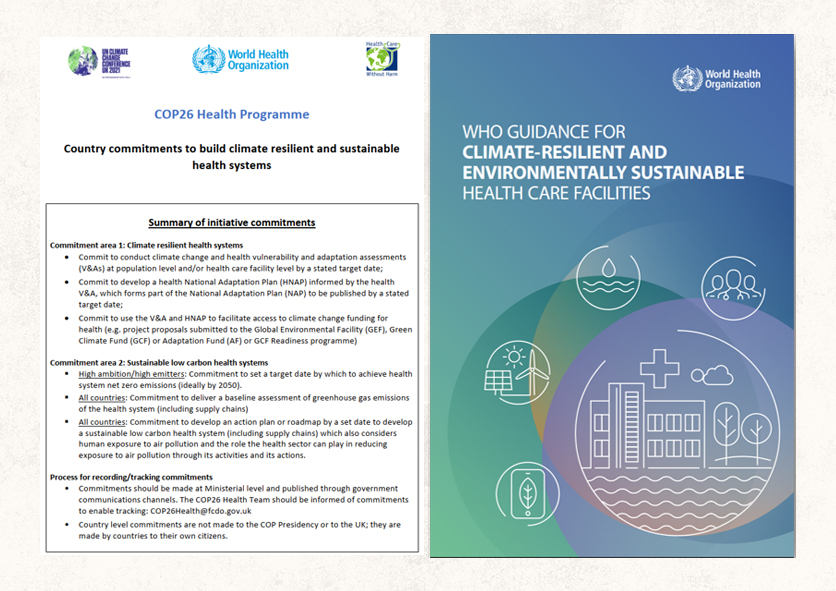
Launched at the 2021 United Nations Climate Change Conference (COP26) in Scotland, the “Country Commitments to Build Climate Resilient and Sustainable Health Systems” initiative is supported in its implementation by technical guidance from the World Health Organization (WHO).
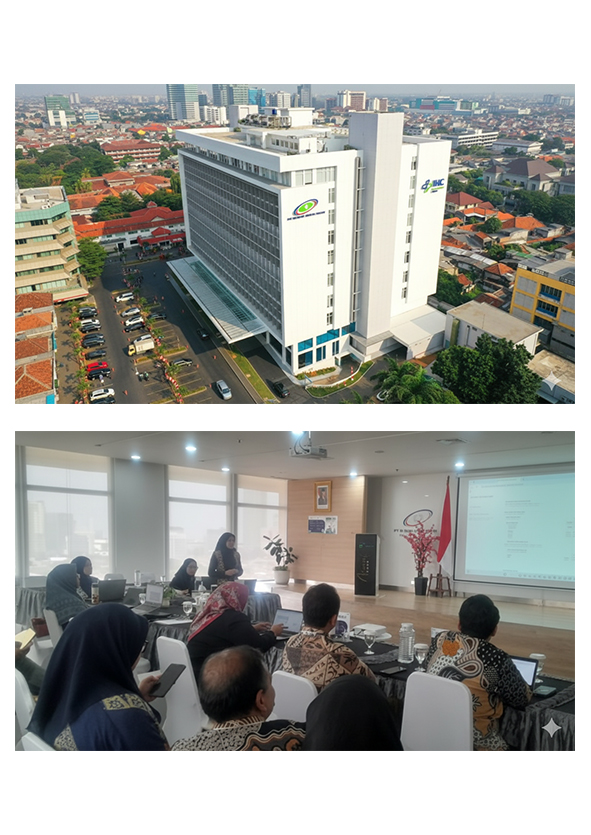
To promote sustainable, low-emission health facilities, Indonesia Healthcare Corporation (IHC) and CarbonAccounting.id conducted outreach and provided technical guidance to Pelni Hospital on conducting a greenhouse gas (GHG) emissions inventory
Indonesia’s pledge at COP26 to build resilient, sustainable, and low-carbon health systems set a clear direction for the country’s healthcare transformation. To help nations turn ambition into practice, the World Health Organization established the Alliance for Transformative Action on Climate and Health (ATACH) and issued technical guidance that translates climate goals into operational steps. From our vantage point at CarbonAccounting.id, these developments mark a pivotal moment: climate resilience and decarbonization are no longer optional add-ons for hospitals, they are core to quality, continuity, and equity of care.
As the state-owned hospital holding company, Indonesia Healthcare Corporation (IHC) has committed to lead by example. IHC is embedding ESG (Environmental, Social, and Governance) principles into its strategy, prioritizing a comprehensive greenhouse-gas (GHG) inventory and a pragmatic decarbonization roadmap. The aim is straightforward: measure what matters, reduce what we can, and build the data foundation to finance and scale solutions across the hospital network.
Pelni Hospital has been designated as the pilot site for this program. With more than 400 beds and complex clinical operations, it offers a representative setting to test end-to-end GHG accounting and operational improvements. CarbonAccounting.id is honored to support this work. Our first phase focused on outreach and hands-on technical assistance to set baselines, align stakeholders, and establish the processes needed for credible, repeatable measurement.
The pilot is guided by our multidisciplinary team, whose members hold general GHG inventory certifications and specialized credentials for the healthcare sector from national and international institutions. Together with Pelni Hospital, we are building a full Scope 1, Scope 2, and Scope 3 inventory, capturing direct fuel use, purchased electricity, and supply-chain emissions that often dominate a hospital’s footprint. This rigour enables targeted interventions, from energy efficiency and refrigerant management to procurement reforms and waste minimization, while preparing the documentation required by investors, regulators, and global partners.
Why does this matter? The healthcare sector both contributes to and is highly exposed to climate risk. Heatwaves, floods, and disease pattern shifts disrupt services precisely when communities need them most. By pairing resilience planning with decarbonization, hospitals can protect patients and staff, safeguard continuity of care, and act as catalysts for broader change. That is the vision we share with IHC: a healthcare system that heals without harm, grounded in robust data, practical action, and a commitment to a healthier, more sustainable future for all.