Your ISO 14001 Certificate Might Not Be Enough in 2026
Your ISO 14001 Certificate Might Not Be Enough in 2026
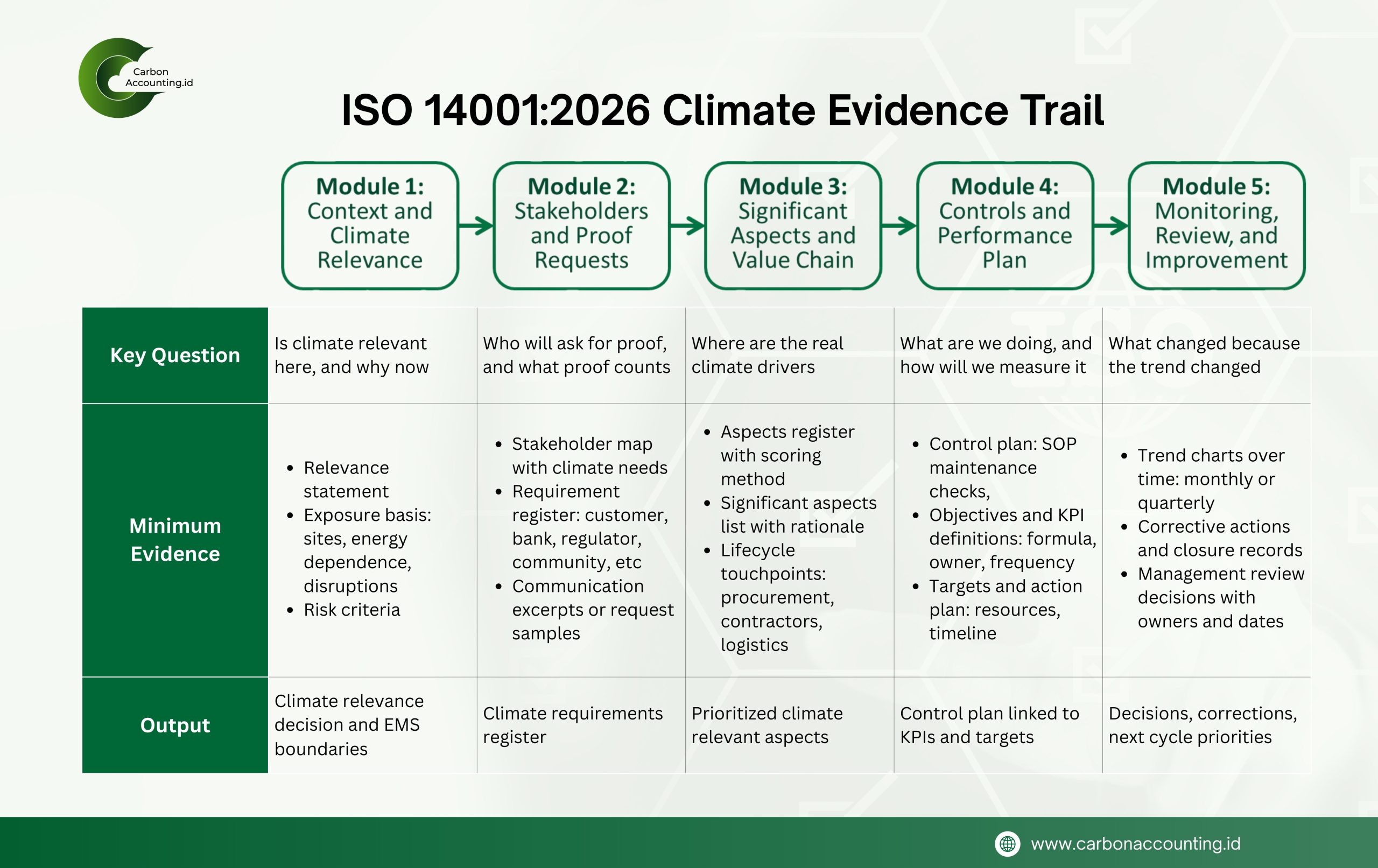
A five step ISO 14001:2026 map from climate relevance to auditable evidence and decisions.
The rules of credibility are shifting in how the world treats environmental standards. They’re no longer a “nice to have” badge of ethics. They’re becoming the practical rulebook for staying competitive in a net-zero economy.
ISO 14001 is being revised again. ISO is moving from the 2015 edition to ISO 14001:2026, with publication currently targeted for April 2026. The PDCA cycle and the familiar structure are still there. What changes is the scope of what counts as “significant”, not only local pollution, but also climate impacts, biodiversity, resource use, and the health of ecosystems.
For climate governance, the direction is clear. Since the 2024 climate action amendment, organizations are expected to determine whether climate change is a relevant issue, and to treat climate related needs as part of stakeholder expectations.
Companies are about to be pushed to answer one simple question in plain language. Why is climate relevant to our business right now. The best answer is not a grand statement. It is a short note that links real exposure to real decisions. Maybe your sites sit in flood prone areas. Maybe operations depend heavily on electricity or fuel. Maybe key customers are tightening requirements, or extreme weather keeps disrupting your supply chain.
Once that is clear, the next question is practical. Who will ask you for proof. A good EMS does not treat stakeholders as a generic list. It names the people and institutions that can slow you down or open doors. Customers may ask for emissions per product or service. Banks and investors may want to see climate risk management. Regulators may tighten reporting or permits tied to energy and environmental impacts. Communities may raise concerns when water systems shift, waste smells worsen, or flooding patterns change.
Then the system points to the real levers. Often, they are not dramatic, just constant and costly. Electricity and fuel use. Refrigerant leaks. Combustion. Organic waste that turns into methane. Contractor and logistics activity that quietly adds up.
The last step is simple, but not easy. Make it real. Put controls in place that work on the ground. Set goals that can be measured, not just described. Track performance over time and bring it to management review so decisions are made and actions are taken.
ISO 14001:2026 is a clear signal that climate is no longer optional background context. It is part of the minimum standard of credibility. In today’s market, environmental performance and business performance move together.