Your ESG Isn’t a Strategy
Your ESG Isn’t a Strategy
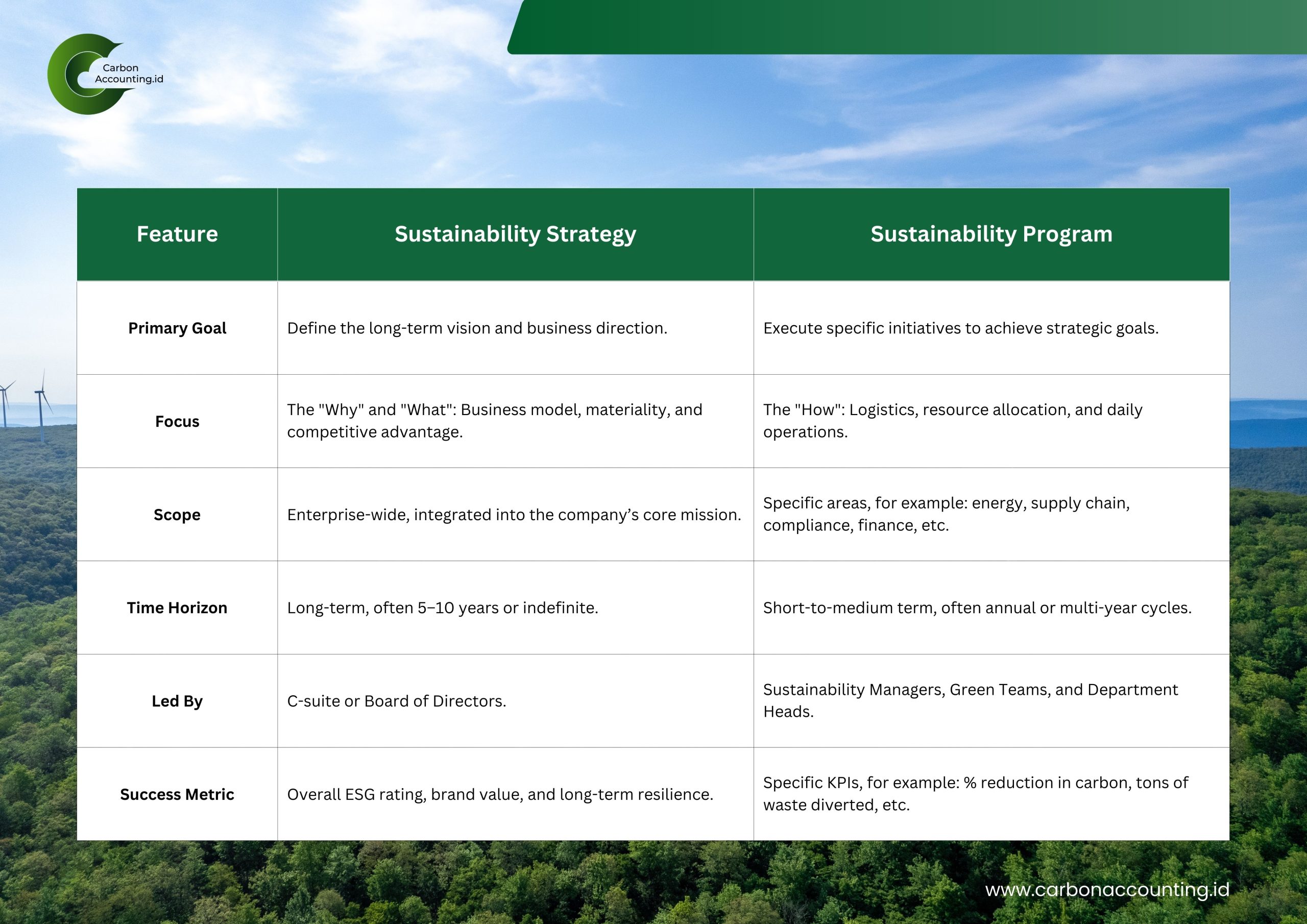
The fundamental difference between sustainability strategy and sustainability program.
Your company might be spending millions on “sustainability” yet still lack a sustainability strategy. A hard truth? Perhaps. But there is a profound difference between implementing sustainability programs and making the strategic choices that truly protect your competitive edge.
Think of the difference the way Michael Porter framed it. Strategy is choosing a “unique and valuable position” with a distinct set of activities (1996). Programs are the activities. Strategy is the reason those activities exist and why they fit your company, not just “best practice” slides.
A sustainability unit isn’t a strategy. A glossy ESG report isn’t a strategy. Even a full GHG inventory isn’t a strategy. Honestly, those are just basic requirements. If you’re doing exactly what your competitors are doing, you don’t have a strategy.
How do you build a sustainability strategy? We’ve developed a specific framework to answer this. It begins by reviewing the company’s position and direction: its vision, mission, and strategic constraints. From there, we identify the specific drivers, which of course vary from one company to the next.
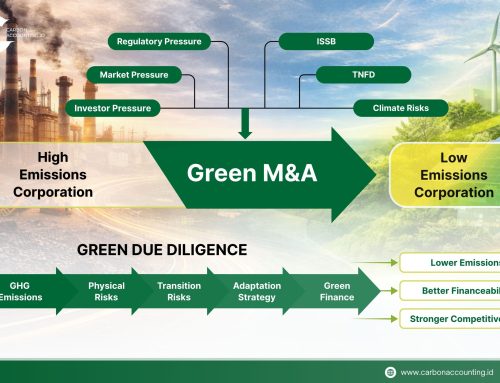
Some companies are market-driven. They adopt sustainability because the market demands it, whether through CBAM, tender requirements, or pressure from buyers regarding their carbon footprint.
Others emphasize the financial side. For them, sustainability is an opportunity for new revenue or cost avoidance, such as GHG projects, premium pricing, or access to cheaper capital.
A third group prioritizes compliance. These companies act in response to tightening regulations and reporting standards. Here, sustainability is a move to mitigate reputational risks, legal sanctions, or audit findings.
Then we separate signals from noise. We check which issues are truly material: financially, strategically and which ones are mostly “nice to have”. We also check urgency, because timing changes everything: some things must be built now, others can be phased in without losing momentum.
This is what turns sustainability from a long list of activities into a clear strategic direction: short term actions, long term positioning. Is it a bit demanding? Yes. But the results will far outweigh the effort.
A one-size shirt only looks awkward. A one-size sustainability strategy can quietly strip away your competitiveness.