Climate Risk in Banking: Governance Upgrade or Gimmick?
Climate Risk in Banking: Governance Upgrade or Gimmick?
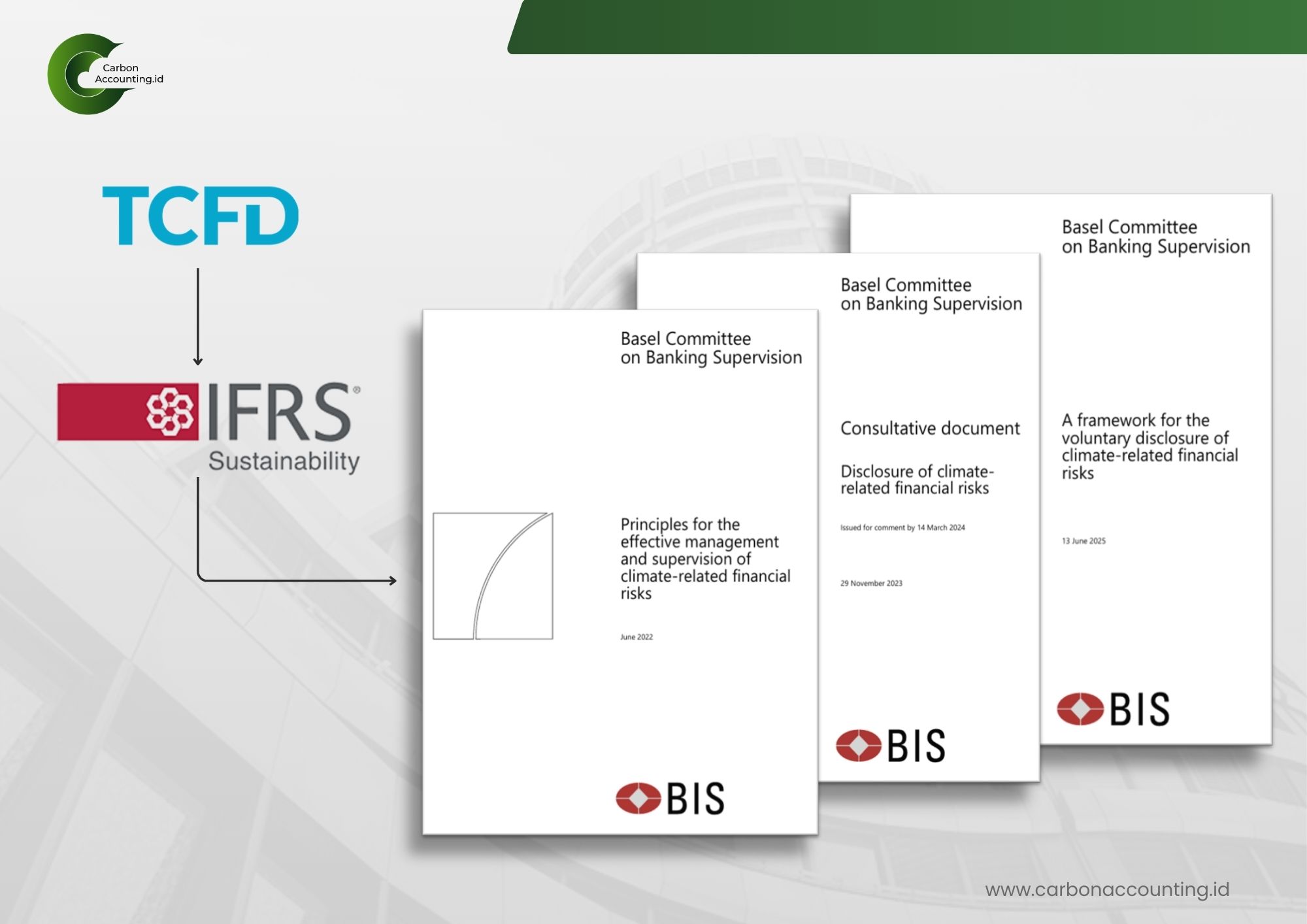
Development of global standards regarding climate-related risks in the banking industry
In a credit committee meeting, “climate risk” used to mean a policy headline: interesting, but distant. That illusion is fading fast.
Global standards now treat banks as risk amplifiers: once capital is deployed, the bank inherits part of the borrower’s climate exposure. Whether it shows up as credit losses, valuation swings, liquidity stress, or operational disruption.
The ISSB’s December 2025 amendments to IFRS S2 make that transmission mechanism uncomfortably concrete. For financial institutions, Scope 3 Category 15 can cover emissions tied to loans and investments, including project finance, bonds, equity holdings, and even undrawn loan commitments. In other words, the “real economy footprint” sits inside the portfolio, not the office building.
Basel’s prudential lens then turns that footprint into governance work. In its 2022 Principles, the Basel Committee expects banks to assess climate-related financial risks across credit, market, liquidity, and operational risk, and to use scenario analysis to challenge assumptions, not to produce a single “correct” forecast.
The 2023 Basel consultation on climate disclosure goes one step further and says the quiet part out loud: when banks transact with counterparties exposed to physical and transition risks, part of those risks “pass on” to the bank. That is why climate risk analysis can’t stay at the deal level. It must be portfolio-level, mapped by sector, geography, maturity, and concentration.
Finally, Basel’s 2025 voluntary disclosure framework offers templates that look like a portfolio X-ray. Exposures and financed emissions by sector, exposures subject to physical risk by geography, mortgage exposures by energy-efficiency levels, and emissions intensity per physical output. It’s voluntary today, but it’s written so supervisors can adopt it domestically and markets will compare banks either way.
We already have the playbooks. The open question is execution: will banks build the data, models, and board-level accountability needed to manage climate risk down to portfolio granularity or will “climate disclosure” become just another glossy appendix?
If climate risk lives in the portfolio, governance must live there too, otherwise it’s just a gimmick.