Integrating ISO 14064-1 and ISO 14067: Toward Credible and Efficient GHG Accounting
Integrating ISO 14064-1 and ISO 14067: Toward Credible and Efficient GHG Accounting
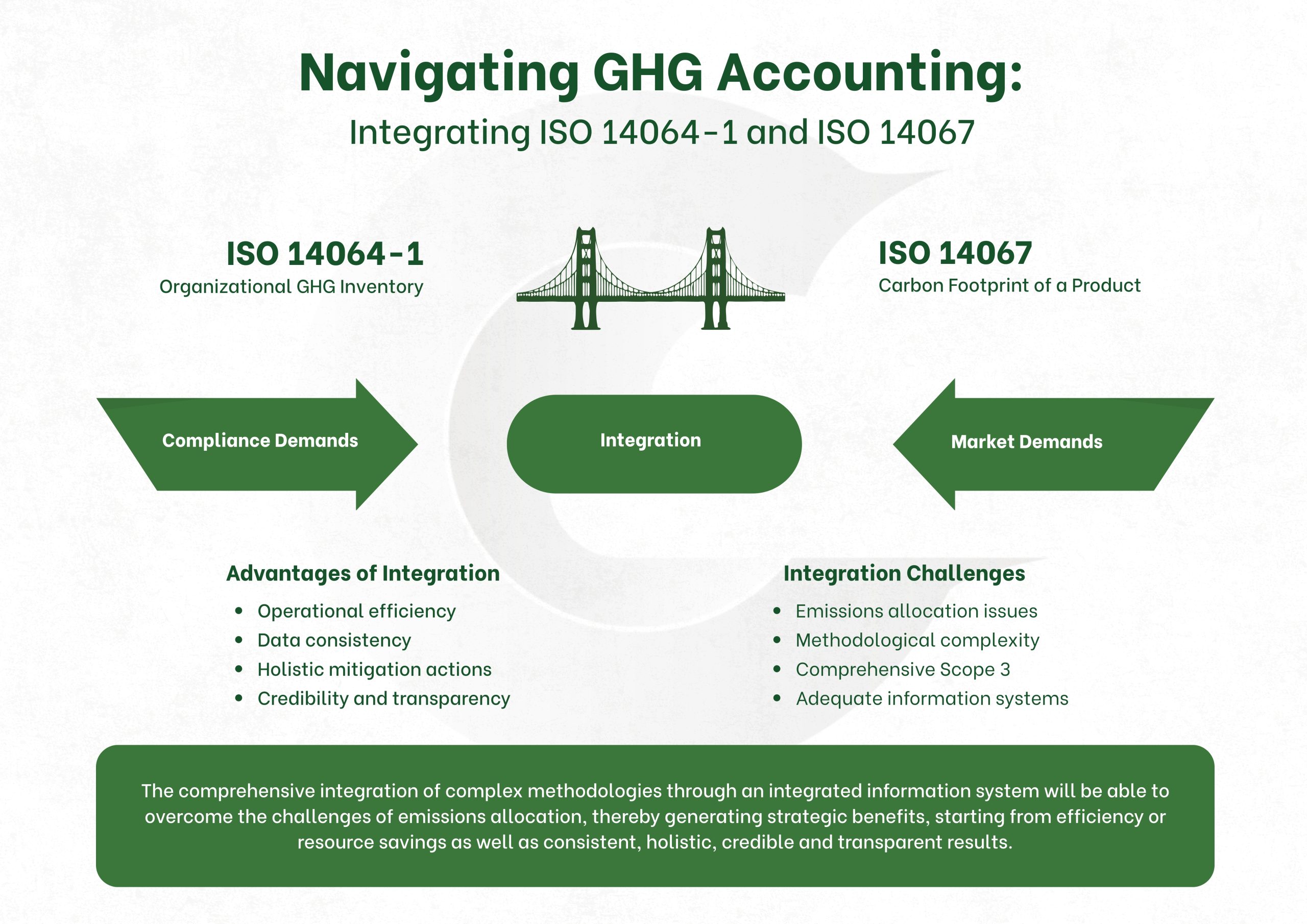
Integration of ISO 14064-1 and ISO 14067 through a comprehensive methodology and adequate information system will generate strategic benefits for business entities.
At CarbonAccounting.ID, we see firsthand how companies are grappling with multiple sustainability standards. Two of the most frequently applied are ISO 14064-1, which governs the quantification of greenhouse gas (GHG) emissions at the organizational level, and ISO 14067, which governs the quantification of the carbon footprint of products. Both standards speak the language of emissions, yet they serve different scopes, emphases, and objectives, one looking across the company as a whole, the other drilling down into the life cycle of a single product.
This difference often leads to a central question for corporate leaders: should these standards be implemented separately, or can they be integrated into a single system? The answer matters. Market pressures, regulatory compliance, and growing customer expectations are pushing companies to report both organizational and product-level emissions. Choosing how to approach this can determine whether reporting becomes a bureaucratic burden, or a strategic advantage.
Our experience shows that integration, while not without challenges, offers clear advantages. When ISO 14064-1 and ISO 14067 are developed under one umbrella system, data consistency improves, operational efficiency rises, and companies can identify mitigation actions holistically. Integration also strengthens credibility: investors, regulators, and customers alike trust disclosures more when they see a unified, transparent framework connecting organizational performance to product footprints.
Yet we must also be honest about the obstacles. Integration introduces complexity in emissions allocation, especially where shared processes serve multiple products. It requires methodological rigor, deeper Scope 3 mapping, and robust information systems. Without careful design, the system can become unwieldy, eroding the very efficiency it was meant to achieve. Companies need to weigh these drawbacks against the long-term gains of integration.
At CarbonAccounting.ID, we have built our approach precisely to address these pain points. By combining methodological care with integrated information systems, we help organizations manage complex allocation issues, capture granular product-level data, and align this with corporate GHG inventories. This isn’t theory: we have successfully implemented integrated ISO 14064-1 and ISO 14067 systems in the healthcare and hospitality sectors, proving that the model works across diverse industries.
The result is tangible. Our partners report faster reporting cycles, lower costs, more credible disclosures, and a clearer line of sight between corporate climate strategies and product-level realities. In short, integration transforms GHG accounting from a compliance checkbox into a strategic management tool. By aligning organizational and product footprints, companies are not only meeting the demands of standards, but also building the credibility and efficiency they need to thrive in an economy where climate performance is business performance.