Bali Airport Pioneers Integrated ISO 14064-1 and ISO 14083 for Green Air Logistics
Bali Airport Pioneers Integrated ISO 14064-1 and ISO 14083 for Green Air Logistics

Experts from CarbonAccounting.ID presented the results of a study on the GHG emissions inventory and decarbonization roadmap at I Gusti Ngurah Rai International Airport, Bali, to relevant stakeholders (October 23, 2025).
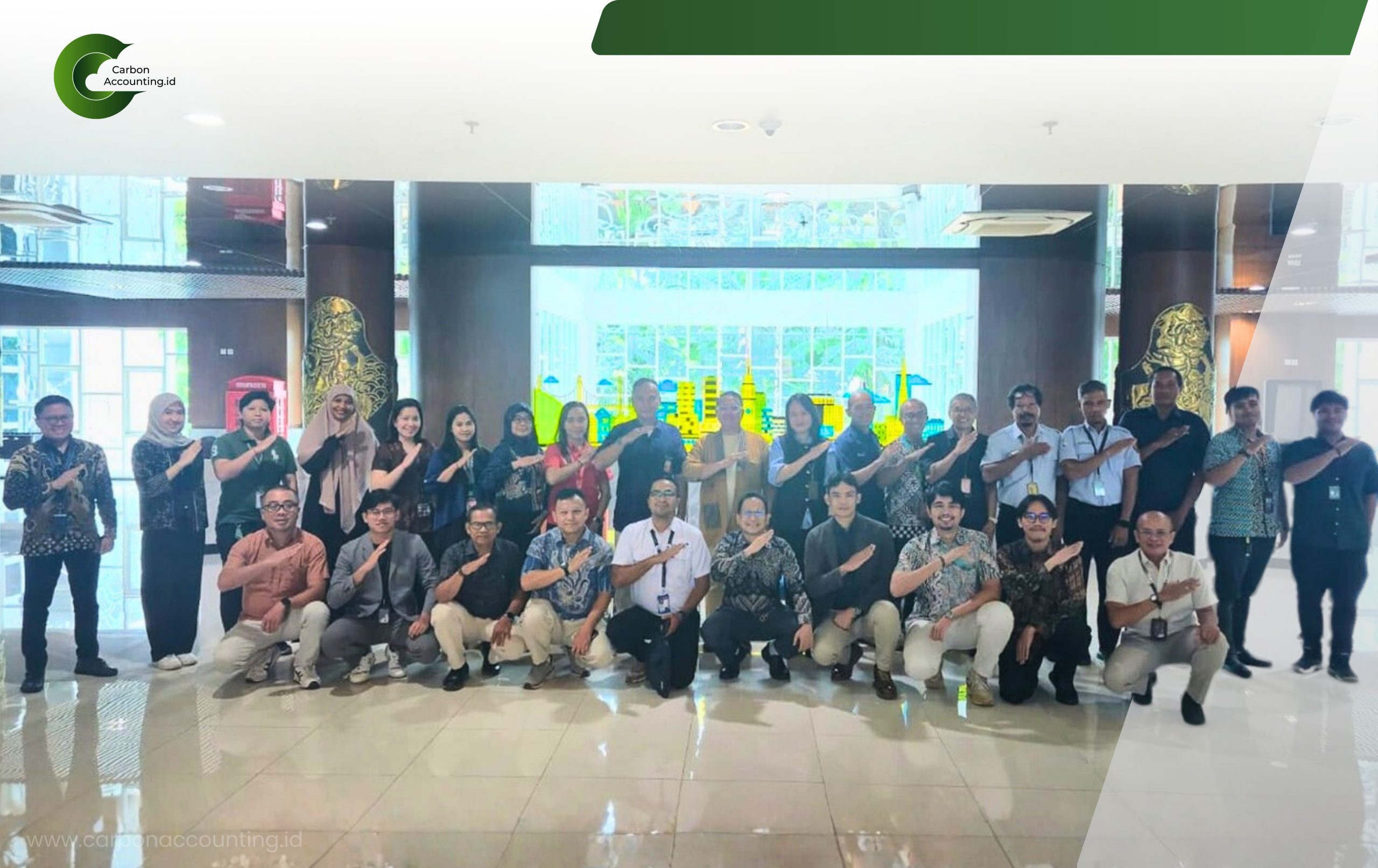
This project pioneered the integration of ISO 14064-1 and ISO 14083 for airports in the Asian region.
Transportation service providers are now navigating twin compliance fronts. On one side, regulators, investors, and stakeholders expect periodic organizational GHG inventories aligned with the GHG Protocol and ISO 14064-1. On the other, customers increasingly require service-level emissions results calculated under ISO 14083 to complete their Scope 3 reporting. Meeting both expectations, credibly, consistently, and with auditable data, has become a strategic necessity rather than a communications choice.
In the transportation sector, the first pillar is relatively mature. Organizational accounting under the GHG Protocol and ISO 14064-1 is widely understood and implemented across operators. By contrast, ISO 14083 (designed to quantify GHG emissions from transportation services) has so far been applied mostly to transport operations (e.g., cars, trucks, trains, ships), while hub operations (e.g., airports, train stations, ports, bus terminals, logistics centres) often remains out of scope. That gap matters: ISO 14083 calls for comprehensive service footprints that integrate both transport operations and hub operations to reflect the true emissions of end-to-end logistics and passenger journeys.
Internationally, airports are only just beginning to close this gap. To date, the most concrete airport applications of ISO 14083 have come from Europe’s TULIPS consortium, involving Schiphol (Netherlands), Oslo (Norway), Turin (Italy), and Larnaca (Cyprus). Their work demonstrates how service-level accounting can be extended beyond aircraft and ground vehicles to include the airport as a hub, aligning with ISO 14083’s system boundary expectations and improving the quality of Scope 3 information delivered to customers.
Indonesia is stepping forward. Injourney Airports is launching a pilot at I Gusti Ngurah Rai International Airport, Bali, to integrate ISO 14083 (service-level) with ISO 14064-1 (organizational-level) implementation. CarbonAccounting.ID is proud to support this initiative, building a unified methodology, data architecture, and assurance-ready documentation so that internal inventories and customer-facing service calculations are consistent by design, not afterthought.
This integrated approach is about more than compliance. It positions Injourney Airports to satisfy internal disclosure requirements for regulators and investors while also delivering credible emissions results to airlines, freight forwarders, and corporate travellers who must report Scope 3. By covering both transport operations and hub infrastructure, the airport can provide a single, decision-useful source of truth that reduces duplication, improves auditability, and accelerates decarbonization actions where they matter most.
We believe this is how regional advantage is built. With Bali as a proving ground, Injourney Airports can set a new benchmark for green and sustainable air logistics in Asia, demonstrating that rigorous, integrated GHG accounting is not only feasible, but a catalyst for better services, better transparency, and better climate outcomes. CarbonAccounting.ID stands ready to help Indonesia’s aviation ecosystem scale this model with a robust methodology, supported by technology, and aligned with global standards.