Avoiding Greenwashing in GHG Inventories: Why DEFRA Isn’t Indonesia’s Shortcut
Avoiding Greenwashing in GHG Inventories: Why DEFRA Isn’t Indonesia’s Shortcut

Indonesia’s emissions math has a convenience problem. Across sectors, companies and even their advisors often default to foreign emission factors, most commonly the UK’s DEFRA dataset, because it’s easy to find, regularly updated, and neatly packaged. The shortcut raises a fair question: is it acceptable to plug in overseas numbers when local factors are incomplete or hard to access? And if we do, what’s the downside beyond a tidy spreadsheet?
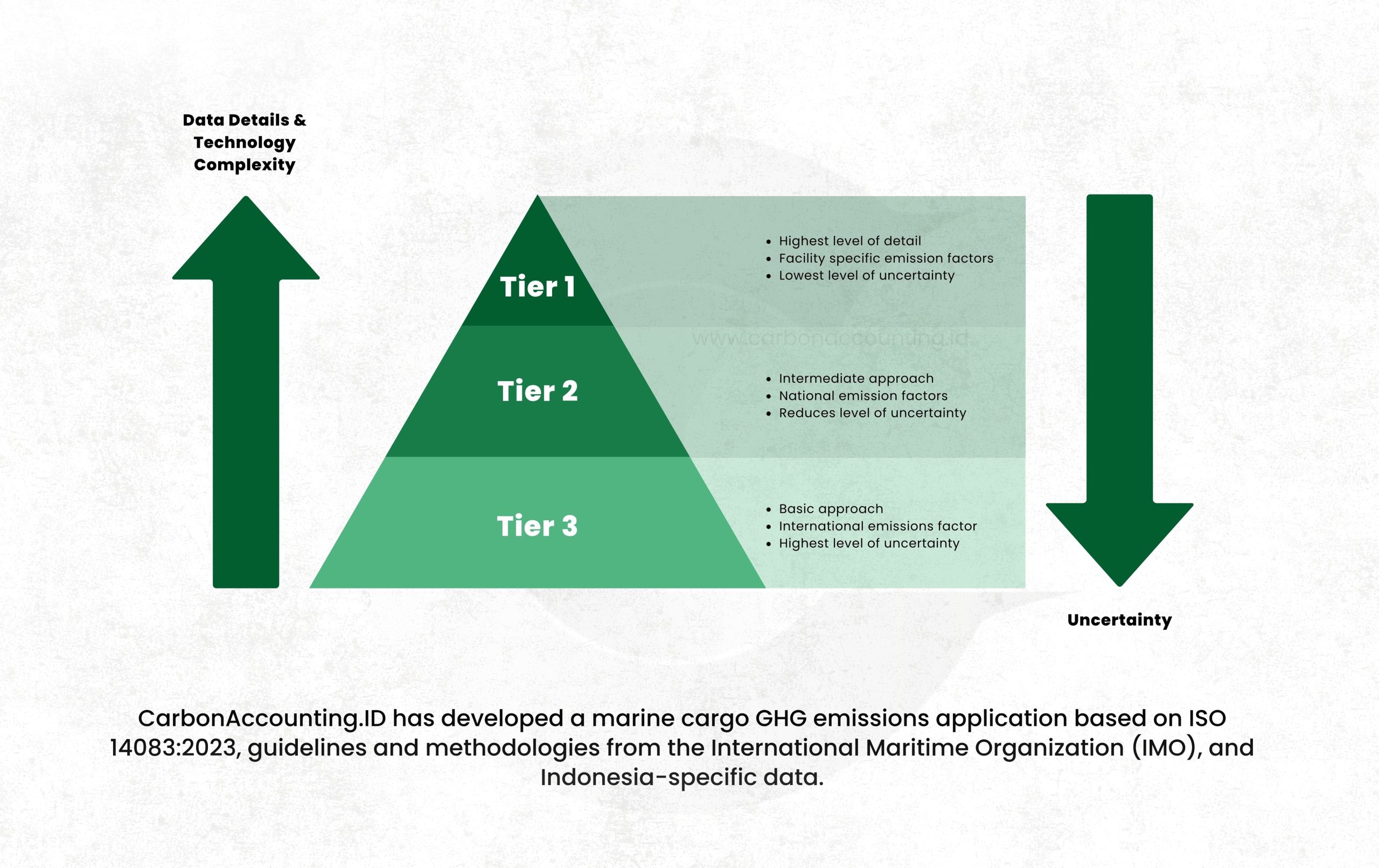
From CarbonAccounting.ID’s perspective, the starting point is regulatory clarity. Presidential Decree 110/2025 states that GHG emissions calculations are carried out using guidelines from the Intergovernmental Panel on Climate Change (IPCC). Those guidelines (2006; refined 2019) set out a Tier Approach: Tier 1 for generic defaults, Tier 2 for country- or technology-specific factors, and Tier 3 for high-resolution, source-specific methods. The principle is simple but demanding: use the highest feasible Tier to reduce uncertainty, knowing that higher Tiers require better data, stronger methods, and more capable systems.
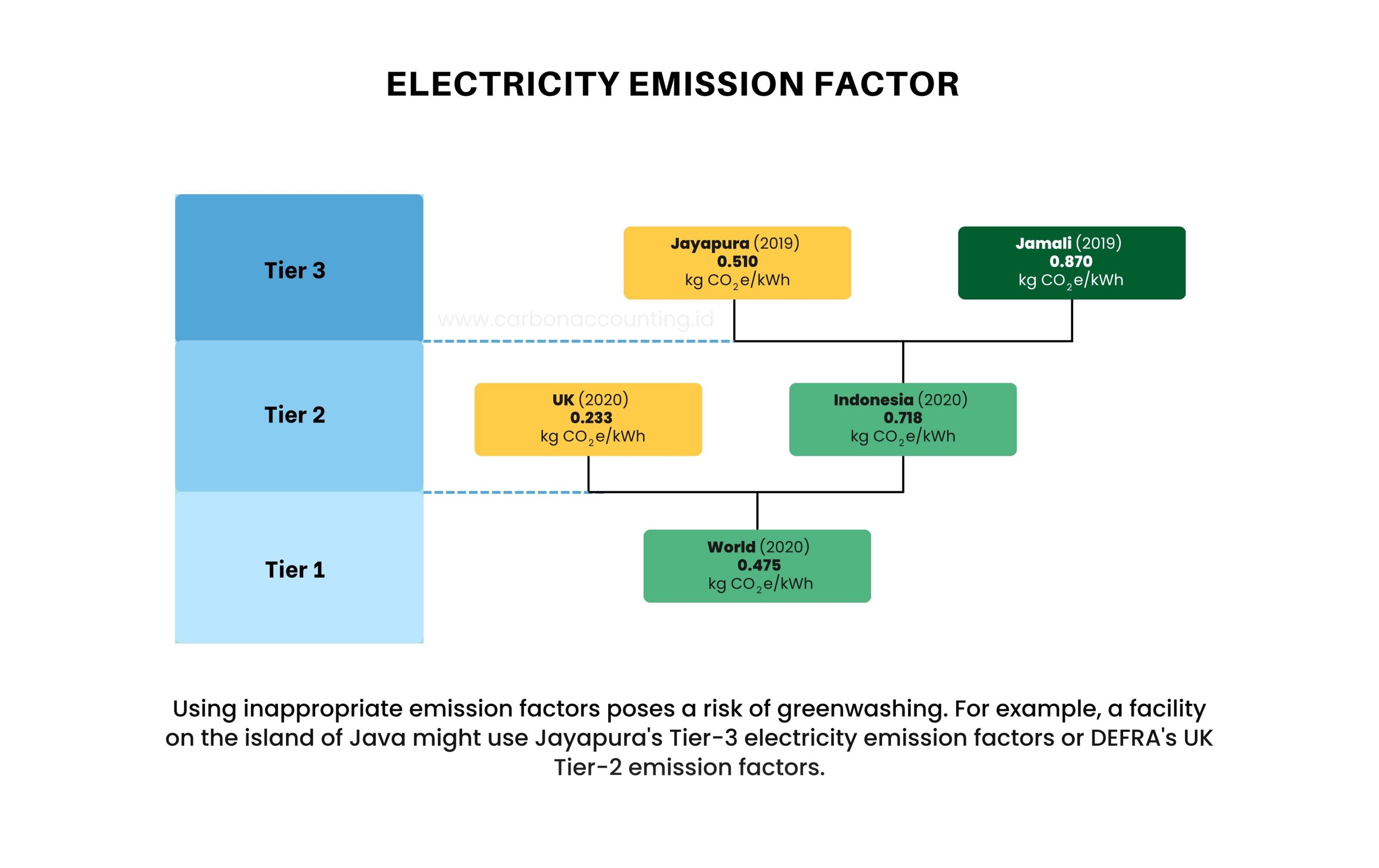
This is where the habit of borrowing factors can backfire. Emission factors are not one-size-fits-all. They encode local realities (fuel quality, technology efficiencies, grid mix) that vary by region and over time. Using DEFRA’s Tier-2 factors in Indonesia or applying a domestic Tier-3 factor from one facility to another, can distort results. A facility on Java, for example, that uses Jayapura’s electricity factor or a UK factor may understate its Scope 2 emissions, creating the illusion of progress where none exists.
Such misalignment doesn’t just produce noisy data. It invites accusations of greenwashing. When reported numbers diverge from physical reality. The integrity of both the consultant and the client is at stake. In regulated contexts, it can also compromise compliance and assurance, because verifiers will probe whether factors reflect the correct geography, technology, and period. If the factors fail that test, so does the claim.
The honest solution is harder work: build Indonesia’s own evidence base and push the system up the Tiers. That means investing in research to refine fuel-specific and process-specific factors, improving access to grid-emission data by subregion and time, and deploying Tier-3 methods where operations and materiality warrant it. Done right, this strengthens national inventories, supports credible corporate disclosures, and increases investor trust.
Our position is straightforward. Convenience should not outrun credibility. When local factors are limited, practitioners should document constraints, justify interim choices transparently, and set a concrete plan to transition toward higher-Tier, Indonesia-appropriate factors. Choose methods that are correct, even when they are difficult, over methods that are easy but misleading. In the long run, the country’s climate integrity, and the market’s confidence in it, depend on that choice.