A Blue Economy for the Giant Sea Wall: Balancing Coastal Protection and Sustainability
A Blue Economy for the Giant Sea Wall: Balancing Coastal Protection and Sustainability
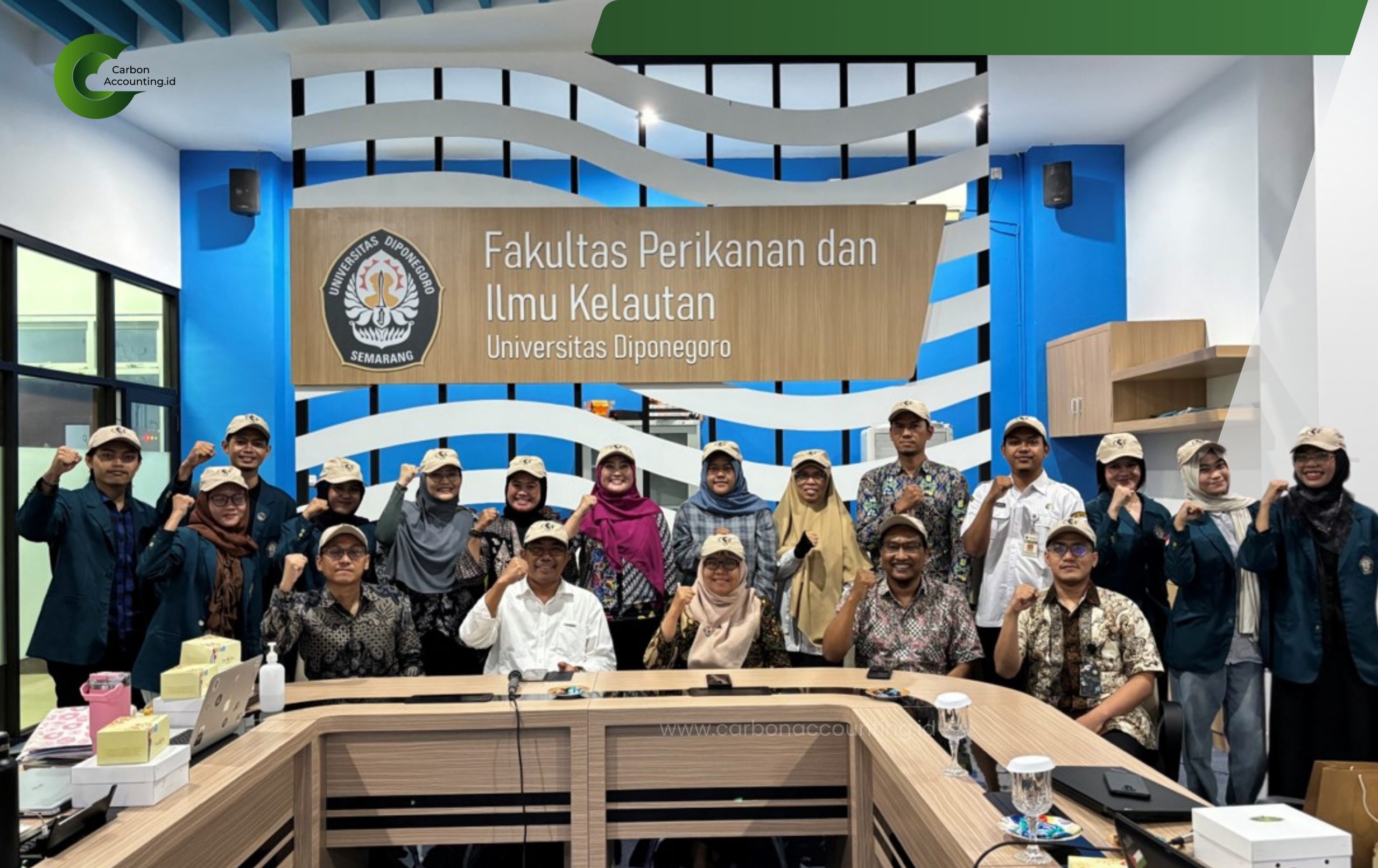
The Blue Economy Groundwork Analysis (GWA) training was held by the Yayasan Strategi Konservasi Indonesia in collaboration with the Faculty of Fisheries and Marine Sciences, Diponegoro University (Undip) from November 5 to 7, 2025.
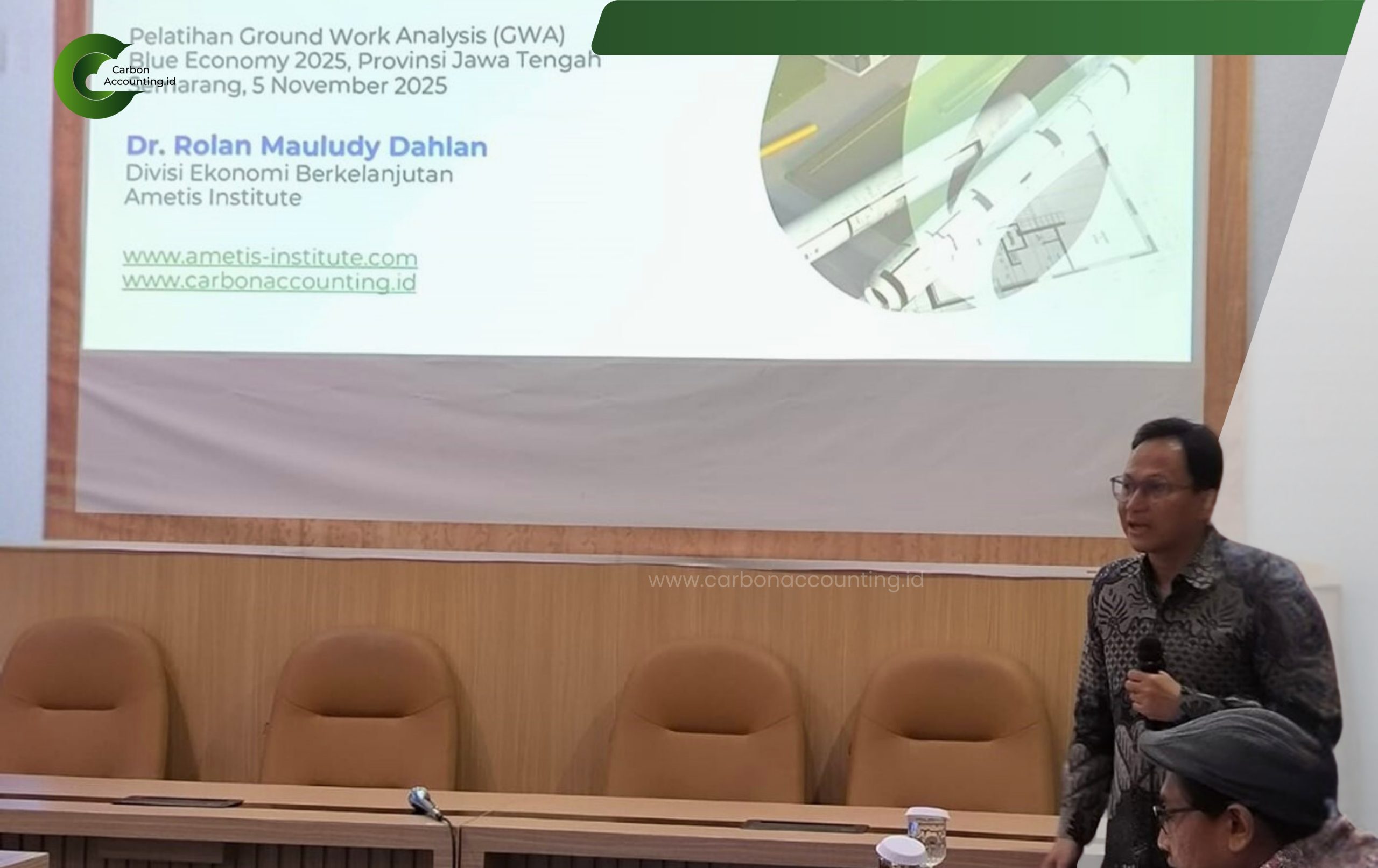
In this training, Dr. Rolan M. Dahlan, ST, MBA, a member of the CarbonAccounting.ID expert team, explained the concept and context of GSW development issues, as well as strategic aspects that need to be considered in preparing a scientifically sound GSW feasibility study.
The Giant Sea Wall (GSW) planned along Java’s North Coast (Pantura) is among the world’s most ambitious climate-adaptation undertakings and one that sits squarely inside Indonesia’s 2025-2029 development agenda. President Prabowo has repeatedly signalled his commitment to realizing the project, underscoring both its strategic urgency and national scale. From our vantage at CarbonAccounting.ID, the GSW is not merely an engineering response to sea-level rise and land subsidence. It is a governance, finance, and social-equity challenge that will test how Indonesia translates climate ambition into executable and accountable action.
That is why we welcomed the Blue Economy Groundwork Analysis (GWA) Training dedicated to the GSW, held 5-7 November 2025 by Yayasan Strategi Konservasi Indonesia (YSKI) in collaboration with the Faculty of Fisheries and Marine Sciences, Diponegoro University (Undip). Bringing together academics, practitioners, government agencies, and diverse stakeholders, the forum created the multidisciplinary space this project demands. The conversations were rigorous but constructive: participants probed not only what the wall could do, but how it should be planned, financed, governed, and monitored over time.
Our expert, Dr. Rolan M. Dahlan, ST, MBA, opened the program with two early sessions. The first unpacked the concept and context of the GSW: the historical and policy background; the policy process and content; the policy context and actors across ministries, provincial governments, communities, and industry; and the social, economic, and ecological stakes for coastal households and local enterprises. The message was clear: decisions at Pantura will reverberate through fisheries, logistics, urban development, and public health, so the framing must be integrative from the start.
The second session discussed implementation strategies, particularly regarding strategic aspects that need to be considered in formulating a feasibility study that can be scientifically justified. Technically, it must address hydrodynamics, subsidence dynamics, sediment transport, drainage, and long-term operations and maintenance. Economically, it must quantify costs and benefits with distributional analysis that distinguishes national gains from local burdens. Financially, it must evaluate funding structures: state budget, blended finance, PPPs, green sukuk and stress-test affordability. Risk management must be explicit: physical risks under multiple climate scenarios, construction and operational risks, and governance risks including procurement integrity, safeguards, and compliance with environmental and social standards
Throughout the training, we emphasized the Blue Economy lens: growth, social inclusion, and ecosystem stewardship advancing together. For the GSW, that implies design pathways that combine gray (hard engineering) and nature-based solutions, livelihood transitions that protect and upgrade small-scale fisheries, and a data-to-disclosure architecture that ties monitoring, reporting, and verification (MRV) to transparent public communication. When communities can see how risk is reduced, how benefits are shared, and how grievances are resolved, trust follows, and with it, smoother delivery.
Ultimately, building intellectual discourse around the GSW is not an academic detour. It is a prerequisite for scientifically valid, technically realistic, and transparent planning. CarbonAccounting.ID supports forums like this because they foster the comprehensive, creative, and win-win solutions Indonesia deserves. If the GSW is to stand for generations, its foundation must be more than concrete, it must be evidence, accountability, and shared purpose.