Heat Is Rising in Indonesia: Quantifying Heat Risk for Corporate Reporting
Heat Is Rising in Indonesia: Quantifying Heat Risk for Corporate Reporting
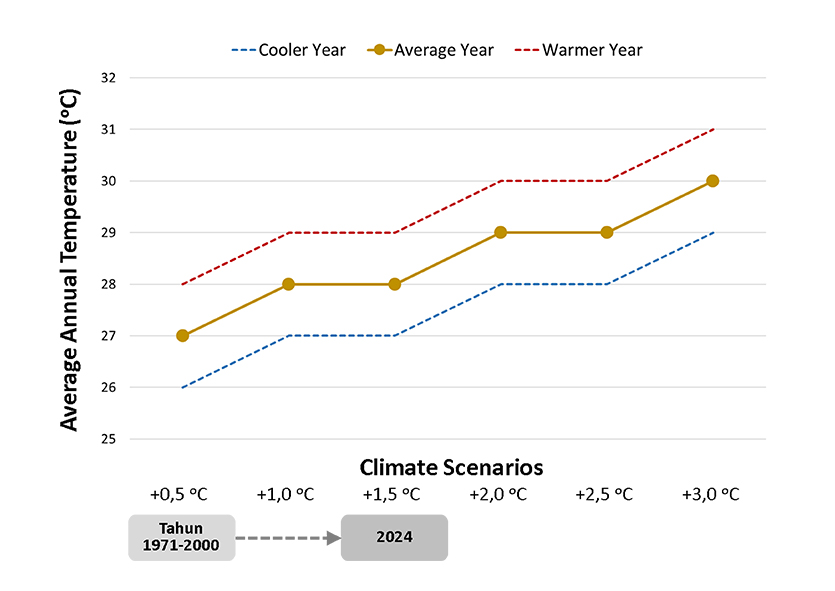
The average annual temperature in the Jakarta area has increased by about 1°C compared with 1971–2000.
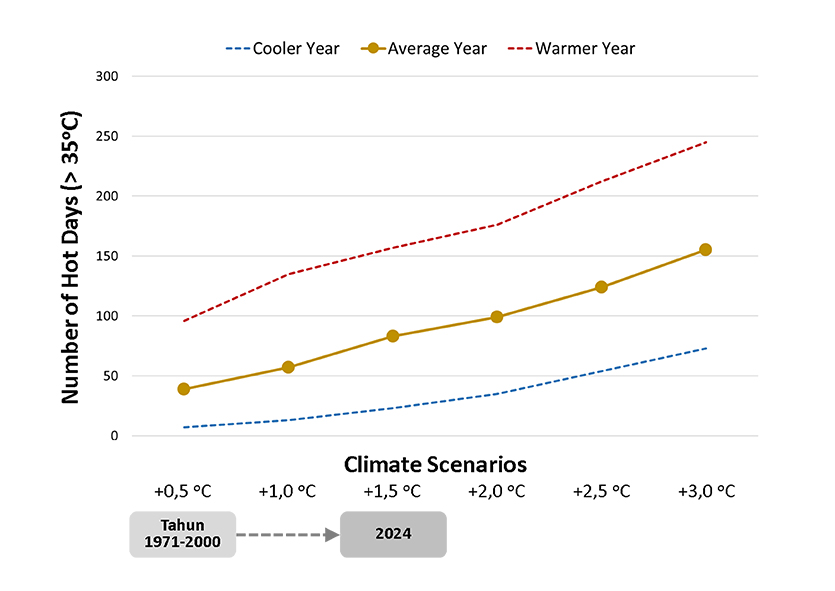
The number of hot days (over 35°C) per year in the Jakarta area has more than doubled compared with 1971–2000.
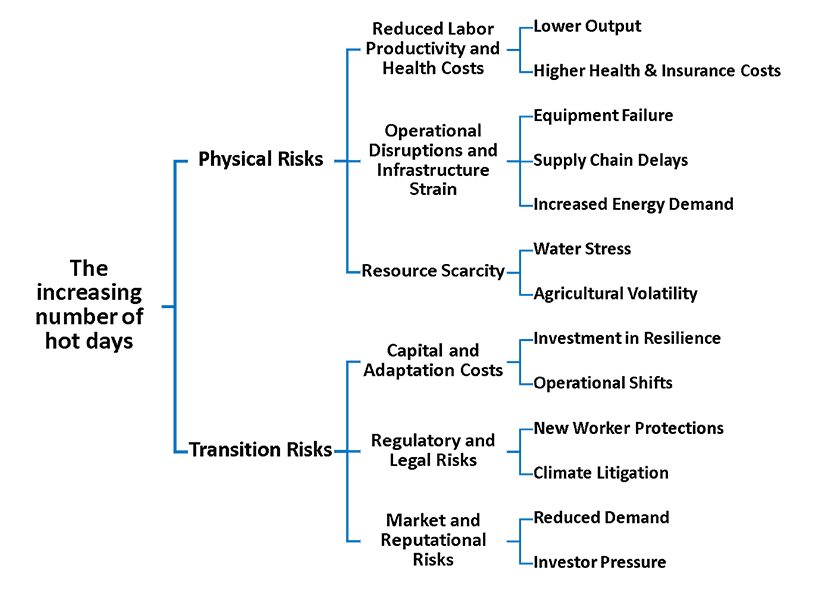
The increasing number of hot days poses climate-related risks for companies, including complex physical and transition risks.
Indonesia is getting hotter and businesses are already feeling it. Temperatures are trending upward, driven primarily by climate change. In Jakarta, the average temperature has risen by about one degree Celsius compared with the 1971–2000 period, while the number of very hot days (above 35°C) has more than doubled. Without a significant reduction in global greenhouse-gas emissions, this trajectory will continue, amplifying both operational and financial pressures on firms.
The business implications fall into two broad categories. First are Physical Risks, the direct, on-the-ground impacts of heat. These include worker stress and fatigue that reduce productivity, heat-related equipment failures, and increased electricity consumption to maintain safe indoor temperatures. Second are Transition Risks, the costs and constraints associated with adapting to new realities and policies. Companies may need to invest in more robust cooling systems, retrofit buildings, or redesign processes, all while navigating evolving regulations and market expectations.
Disclosure is no longer optional. Under IFRS S2 and PSPK 2, companies are expected to report material climate-related risks, including those tied to extreme heat. To help organizations meet these requirements with confidence, CarbonAccounting.ID has built a practical, decision-ready service to quantify the probability and severity of temperature risks. Provide us with your site locations and approximate asset values, and we translate heat exposure into defensible, auditable disclosures suitable for financial statements and sustainability reports.
Our approach blends climate science with applied analytics. We use a regional meteorological model with a 25×25 km resolution to estimate local heat dynamics, and pair it with an empirical assessment of hot-day risk based on benchmark findings from established international studies. This combination allows us to move beyond generic narratives and deliver site-specific risk profiles that decision-makers can act on, whether to safeguard workers, protect equipment, or optimize energy use.
We are not stopping there. Our research team is actively enhancing model resolution and expanding Indonesia-specific empirical studies to sharpen the accuracy of heat-risk estimates across diverse geographies and industries. Continuous research is, in our view, a strategic pillar of Indonesia’s climate transition. By turning complex climate signals into clear financial insights, CarbonAccounting.ID helps businesses stay compliant today, while building resilience for the hotter years ahead.